
.png.webp?176338937125464)
.jpg.webp?176338937112922)
.jpg.webp?176338937119278)
.jpg.webp?176338937111240)
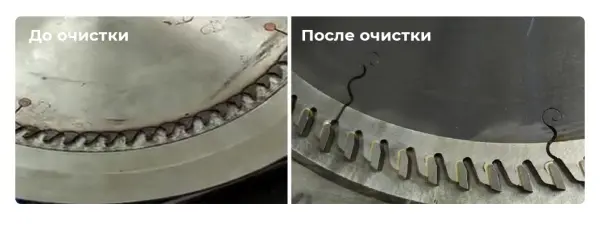


In all other aspects, the laser confidently surpasses competing methods: even art restorers often prefer coherent light to brushes and chemicals. At the same time, in conservative engineering circles, laser cleaning is still jokingly referred to as a “laser sandblaster” — it has been replacing the previous industry favorite so rapidly.
Laser Metal Cleaning. Features of a Mobile System
Precision
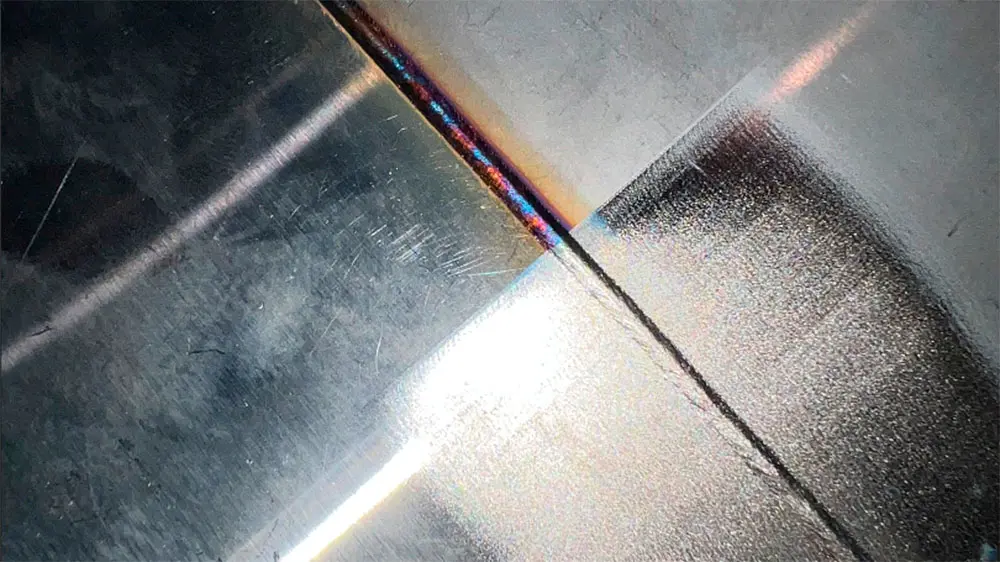
The key feature of laser cleaning is its exceptional precision. For example, a 1 kW pulsed laser removes a layer only about 1 μm thick from the surface in a single pass. Add to this the complete absence of kinetic impact — photons have no mass. For comparison: Cr₂O₃ particles in the finest GOI polishing paste No. 1 are 0.1–0.3 μm in size, but due to pressure during polishing, clumps of paste leave grooves up to 5–10 μm deep.
Micron-level precision ensures that there is no risk of damaging the cleaned surface, which eliminates the need for mechanical guides or clamping devices. This means that a handheld laser cleaning system is fully self-sufficient.
Automation
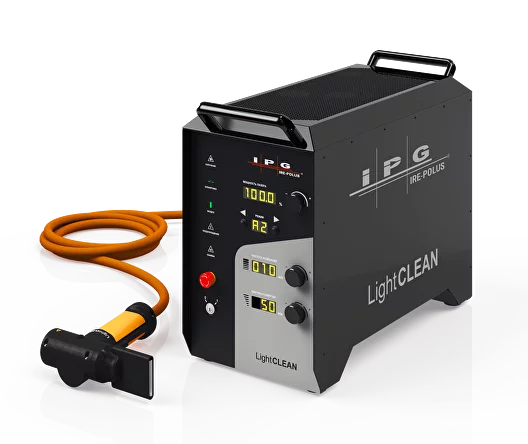
At the same time, typical handheld laser cleaning systems are highly convenient for robotic integration. The laser unit is compact and weighs around 50 kg including built-in active air cooling. The handheld cleaning gun weighs less than 1 kg, making it usable even for lightweight robotic manipulators. Cable length may vary from 5 to 15 m (or even 25 m), which is more than enough for robotic arms with a reach of up to 5 m.
Handheld laser cleaning units typically offer a wide range of operating modes, yet they are easily configured either manually or via preset profiles. Even the simplest systems include an Ethernet interface, ensuring straightforward integration or remote control.
Consumables and Waste Management
The second key feature of laser cleaning is the absence of consumables besides electricity. Competing methods require either:
- replaceable abrasive media;
- sand or shot blasting material;
- CO₂ with a chilled storage system;
- or hazardous and expensive chemical reagents.
Corrosion is one of the most complex contaminants to remove. Power consumption for removing a dense rust layer covering the entire surface is approximately 1 kW per square meter. With experience (which develops within hours), energy consumption typically decreases by 1.5–2 times.
And since there are no consumables, there is almost no waste. The laser vaporizes very thin layers, and during removal of paint or oil-based contaminants, only small amounts of fumes and vapors are produced. A standard ventilation system is sufficient. Rust, being an oxide, simply evaporates and forms only a small amount of harmless dust.
For comparison:
- Abrasive cleaning is cost-effective but extremely slow and coarse.
- Sandblasting and shot blasting require not only consumables but also disposal of increased volumes of waste material.
- Dry ice cleaning produces minimal waste but requires a cooling chamber — “dry ice” cannot be stored for long.
- Chemical cleaning requires skilled personnel, expensive reagents, and strict waste disposal procedures.
Laser Type
In laser cleaning, the operating mode is more critical than power alone. Devices fall into two categories: continuous-wave and pulsed lasers. Both are labeled by average output power.
A continuous-wave laser heats not only the focal point but also the surrounding surface, which may cause melting of low-melting materials or thermal deformation of thin components. During weld cleaning, continuous exposure may also negatively affect the microstructure of a fresh weld, causing microcracks or surface layer changes.
Pulsed lasers avoid these issues, even though peak pulse power can exceed average power by a factor of 10–15.
In metal cleaning — the most common application — the short pulse doesn’t allow heat to spread deep into the material, but provides enough energy to evaporate oxide layers. Mechanical expansion due to rapid heating causes brittle oxide films to fracture cleanly.
Effective Cleaning Without Surface Damage
Laser rust removal is both efficient and visually impressive. Other industrial contaminants are removed even more easily. Oils evaporate before burning; paint coatings heat, crack, and disintegrate. A respirator is recommended when cleaning painted surfaces.
Metals, glass, and plastics have a significantly higher reflectivity than contaminants — even if power settings are accidentally increased, excess energy is reflected rather than absorbed.
A removal depth of ~1 μm combined with drastically different absorption levels between contaminants and clean surfaces ensures that laser cleaning does not damage the underlying material.
Ease of Use
Operating a handheld laser is simpler than learning to use an angle grinder safely. With competitive pricing and stock availability from Intellectual Robot Systems LLC, installation and commissioning are fast and straightforward.
The system operates right “out of the box”: connect the cable and cleaning gun, put on safety goggles, and apply power.
Only three basic parameters require adjustment:
- Power level (5–100%);
- Scan frequency (25–125 kHz);
- Cleaning width (beam sweep angle 10–100 mm).
Modern systems include CAN or Ethernet interfaces and offer both factory and user presets. The interface is as easy to configure as a smartwatch alarm.
Durability
In compact systems, fiber lasers have become the industry standard: they are durable and contain no fragile components.
Guaranteed emitter lifetime: 100,000 hours — over 34 years of continuous operation. Typical real-world service life is ~1.7× higher.
Range of Applications
The non-contact nature of laser cleaning greatly expands its application scope. Although commonly referred to as “laser metal cleaning systems,” this is only part of their capabilities. Typical applications include:
- mold cleaning (removal of grease, plastic, rubber residues);
- food and medical industries (burnt organic residues, polymerized oils, bio-deposits);
- weld pre- and post-treatment (rust, oxide layers, primer, heat tint, scale, paint, enamel, cement);
- glass and plastics (paint, oils, varnish, coatings, deposits).
It’s clear that many more applications can be developed thanks to one key advantage: laser cleaning does not damage the substrate. This makes experimentation not only safe but often highly effective.
Frequently Asked Questions (FAQ)
It depends entirely on your tasks. This section presents handheld mobile units. However, they can easily be integrated into any robotic system. Therefore, focus mainly on power: the higher the power, the faster the cleaning process.
You can personally test different models at our demonstration facility in Moscow or send us samples of your materials for testing. We will promptly provide you with a detailed report with the results.
The names speak for themselves: a continuous laser emits a beam at the rated power stated in its specifications. A pulsed laser “stores” energy for each pulse and releases it in micro- and nanoseconds. At its peak, the pulse power exceeds the average power by a factor of 10–15.
A simple but illustrative analogy: place 10 bricks on a board one by one over 10 seconds, and then drop a stack of 10 bricks in one second. In the first case, there will be a long dent. In the second case, the board is likely to crack.
The same applies to how lasers interact with a surface: continuous lasers heat and burn the contamination and the surrounding area, while pulsed lasers remove contaminants sharply without affecting the material outside the focal point. For clean, precise surface treatment, a pulsed system is generally preferred.
The laser beam is directed at the contaminated surface. Its energy is high enough to cause the contamination to evaporate or break down into fine dust.
Since clean surfaces reflect light differently than contaminants, the laser simply reflects from clean areas without damaging them.
How to choose the correct power level?
The list of possible contaminants is broad, so power selection depends mainly on the material being cleaned. One general rule applies: power directly affects cleaning speed nearly linearly. Since all pulsed systems allow fast power adjustment from 5% to 100%, choose according to the principle “more power is not worse.”
Practically none, except for electricity: the approximate maximum consumption is 1 kW per square meter of cleaned surface.
You must protect your eyes with special safety goggles (included). A superficial burn, such as on a hand, would require intentionally holding the beam on the skin for a relatively long period.
This is unsurprising. The human body is over 60% water, and water has the highest heat capacity of any substance. A beam that evaporates oxide in milliseconds will not damage skin within a second.
100,000 hours of continuous operation — more than 30 years of standard 8-hour workdays.
The manufacturer provides a 12-month warranty and supplies spare parts directly. During repairs, replacement equipment is provided by both our company and the manufacturer. Remote diagnostics are available (when supported), and on-site service visits can be arranged.
Warranty service may be performed either at the manufacturer’s service center or directly at the customer’s facility, depending on the nature of the issue.
Chinese-made models are serviced similarly, but keep in mind the time required for shipping to and from the manufacturer.
All handheld models feature intuitive and easy parameter settings.
By default, the systems operate from the mains. You can use battery packs and a converter, but note that the maximum power consumption is up to 6 kW, which may significantly reduce mobility due to battery weight.
Modern generators are compact enough — choose one that suits your needs.
Beam width has little effect on total productivity because the output power remains the same. However, processing technique and results differ noticeably. A narrow beam allows faster and more precise cleaning of surfaces with complex geometry and deep grooves.
Yes. Some experimentation may be required, but most models already include modes designed to create a micro-adhesive textured surface ideal for painting or coating.
Practically not at all. Some boundary modes may alter surface relief by only a few microns. The temperature of the cleaned part remains virtually unchanged.
Contact us and we will prepare the equipment for your visit at our demo center. We can also arrange a live online demonstration.
Chinese manufacturers have strong competence in consumer electronics and some mechanical engineering, but high-precision optics — necessary even for basic laser rust removal systems — is still not their strength.
We supply equipment built only from modules produced by leading global manufacturers — in particular, IPG Photonics, the world leader in fiber laser technology.


