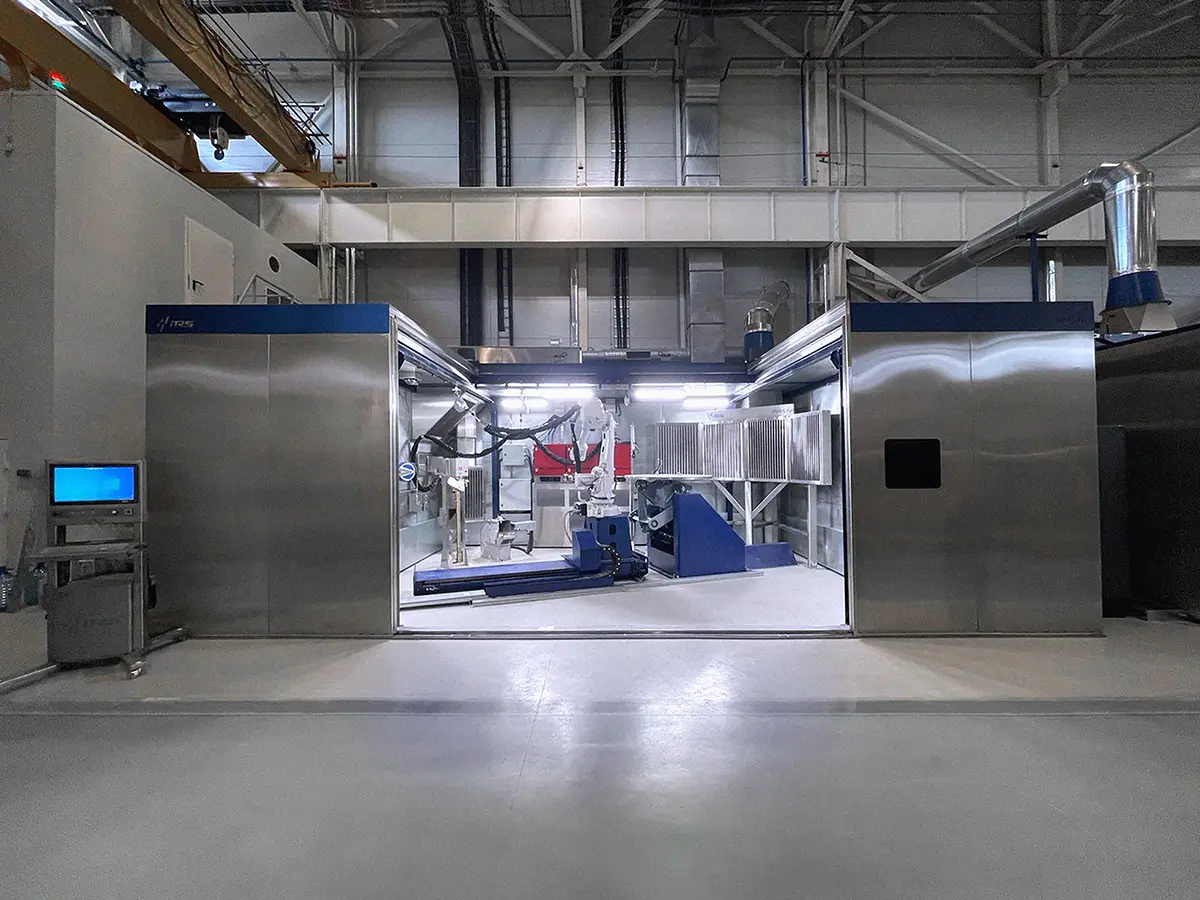
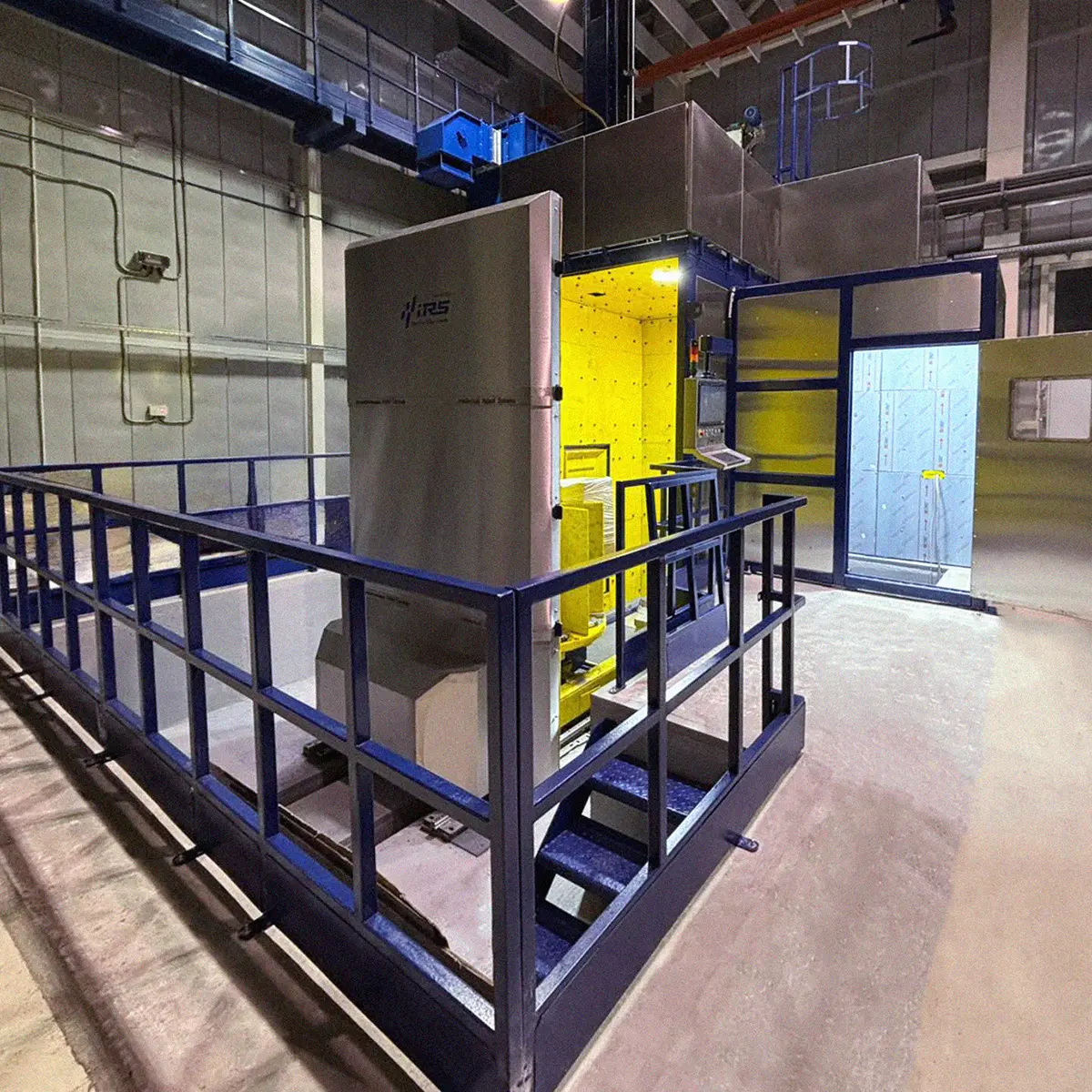
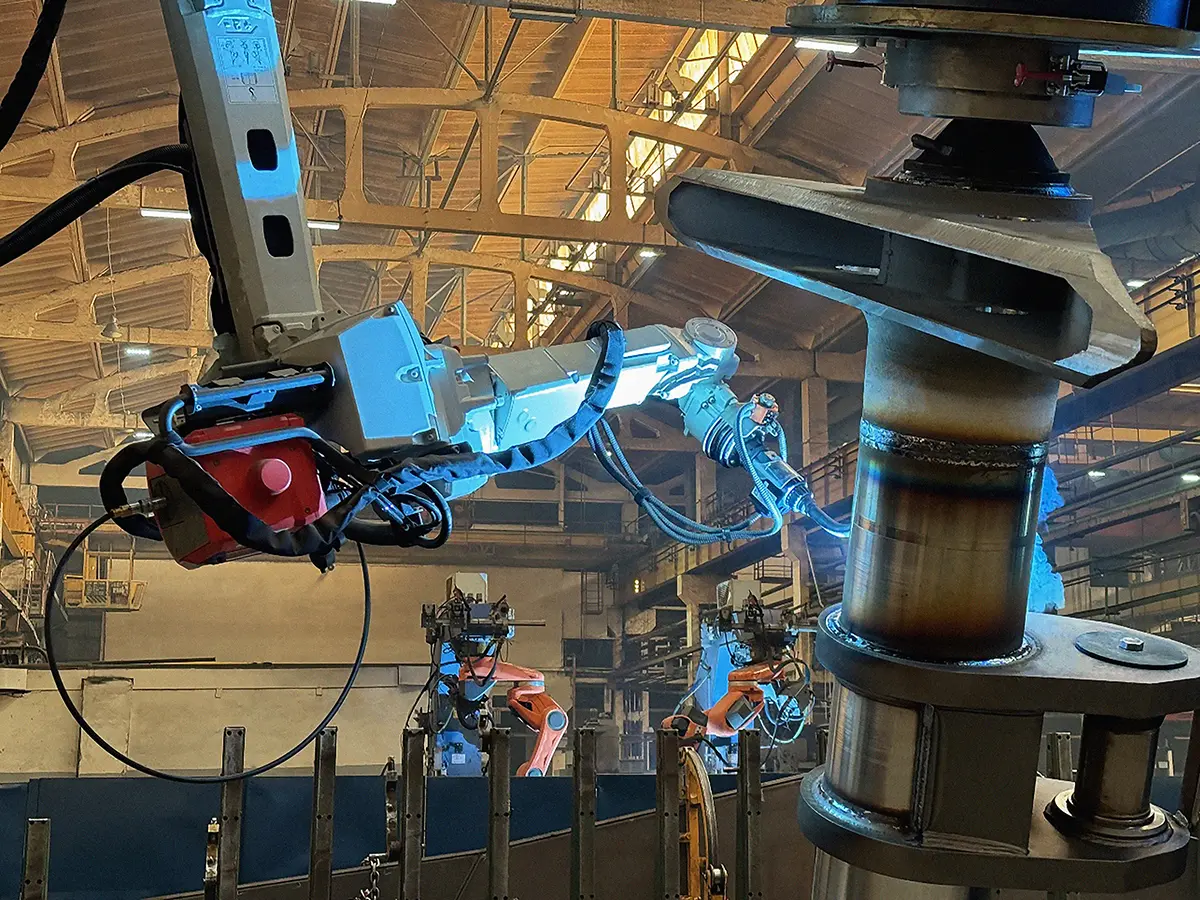
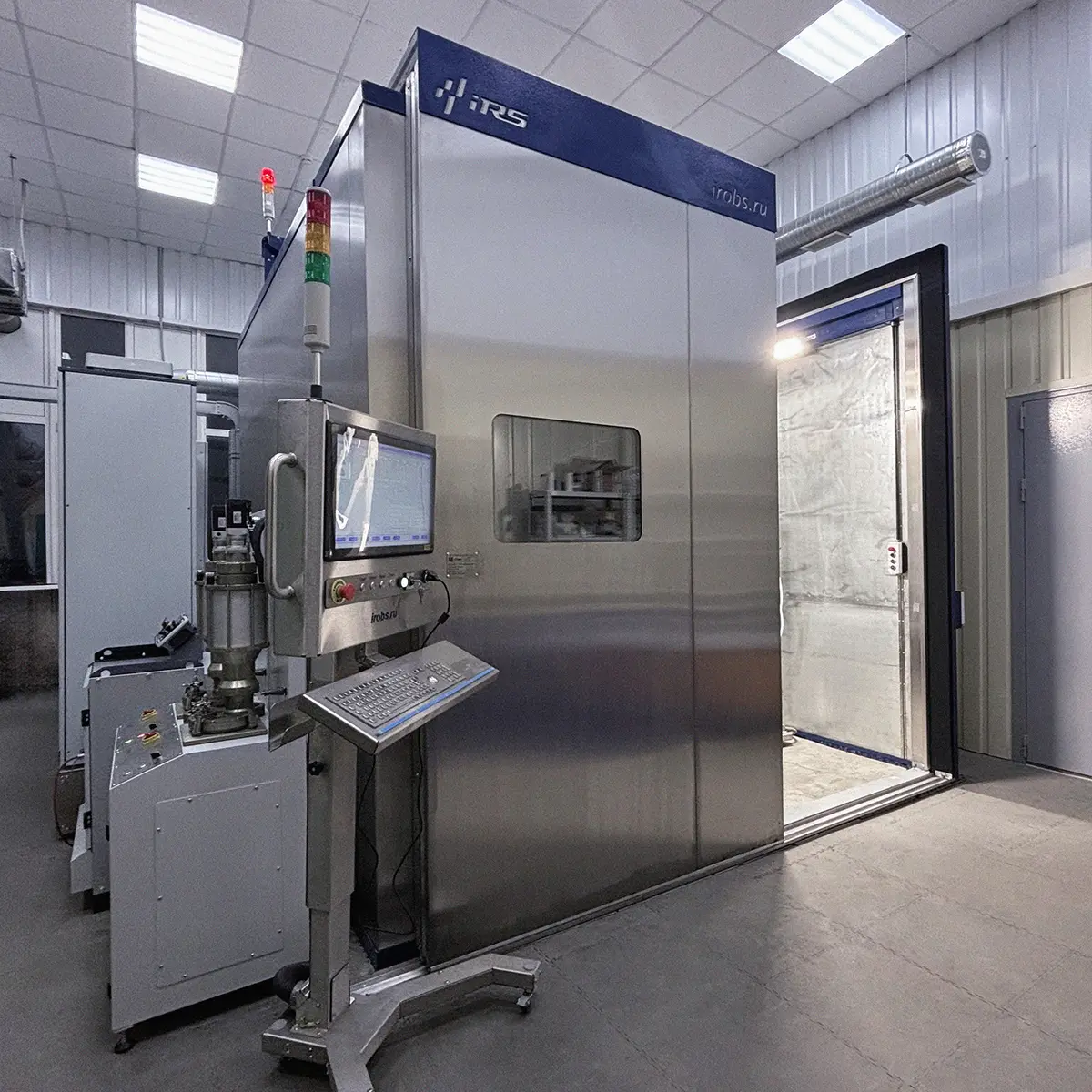
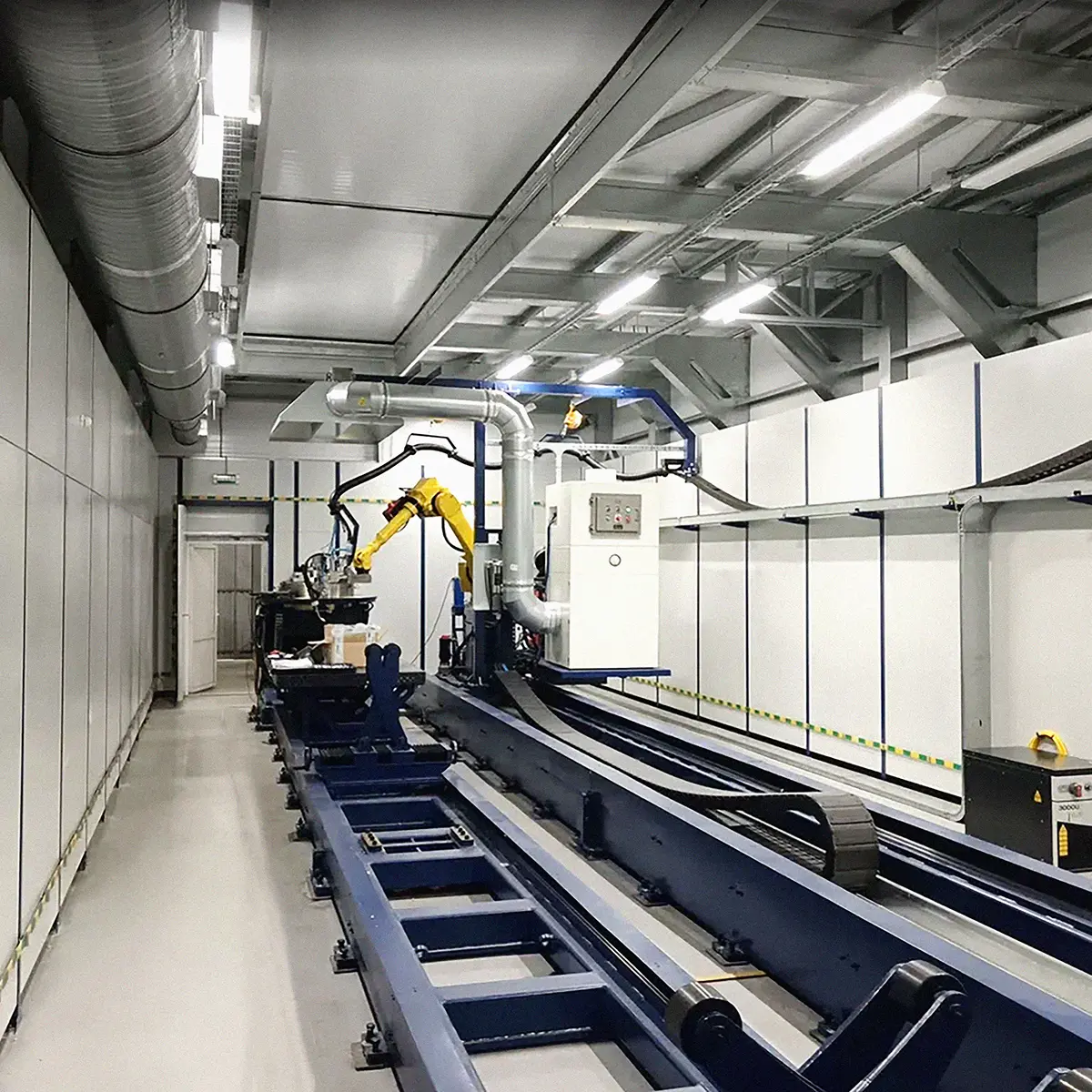
iRS-L-clad robotic laser cladding system
The iRS-L-clad robotic laser cladding system is a high-tech solution designed for applying coatings to various metals and alloys using laser radiation. This process significantly enhances the performance characteristics of materials such as wear resistance, corrosion resistance, hardness, and strength.
Main operating principle
The laser cladding process involves using high-intensity laser radiation to melt the surface of the base material and add filler material (powder or wire), which, in its molten state, forms a strong and durable coating. The base material is only slightly melted, which means its original structure remains virtually unchanged.
The laser power source provides precise heating, the robot and positioner ensure the required trajectory of the laser head movement and rotation of the workpiece, and the powder feeder delivers material into the processing zone.


Main system components
- Industrial robot
- Tilting manipulator 90°
- Tailstock with rotating center
- Adjustable roller support
- Control panel
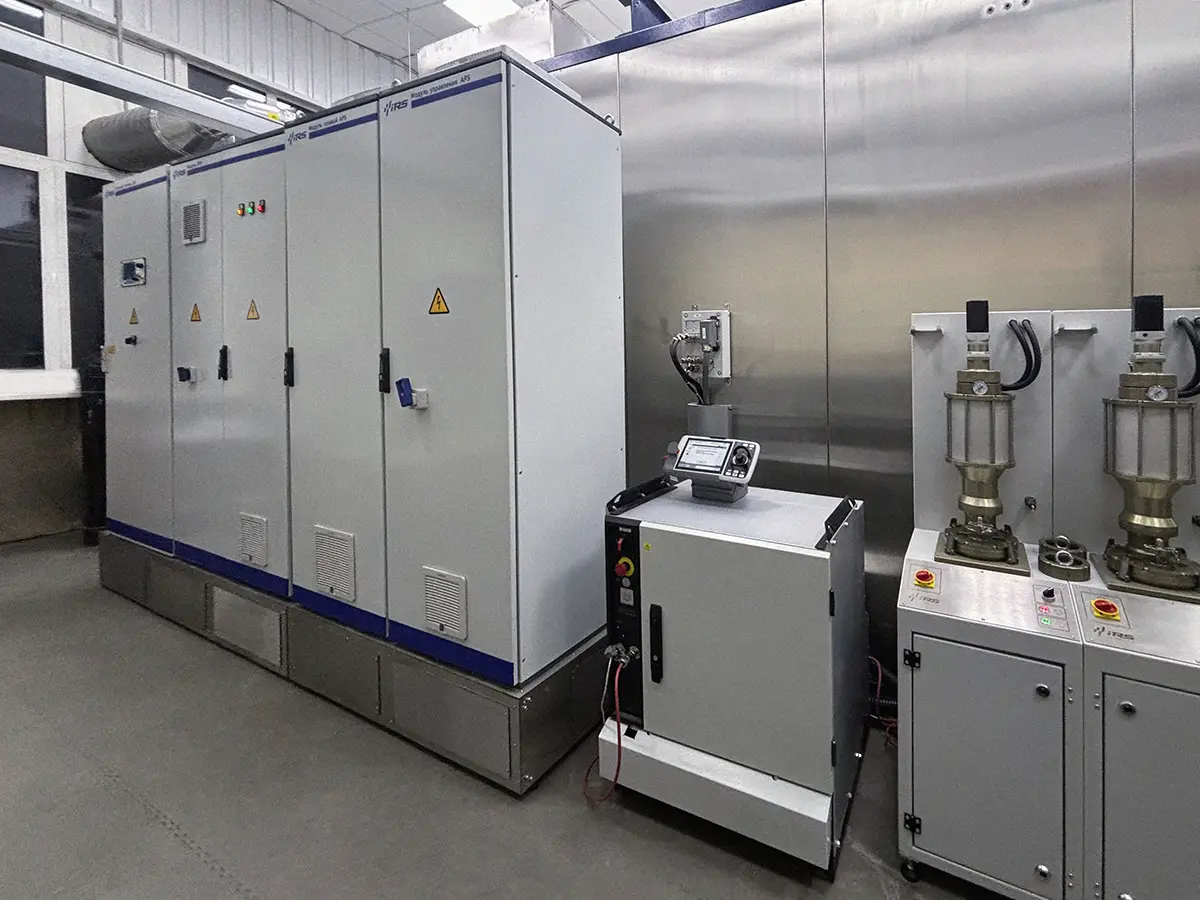
- Control cabinet
- Laser source
- Powder feeder
- Chiller
Technical specifications
Minimum workpiece diameter — 30 mm
Maximum workpiece diameter — 600 mm
Maximum workpiece length — 6000 mm
Maximum workpiece weight — 10 t
Load capacity of the tilting manipulator (horizontal position) — 2 t
Spindle rotation speed during cladding — up to 60 rpm
Acceleration time to working speed — 10 sec
Type of cladding material — wire, powder
Industrial robot — FANUC / ABB / KUKA
Cladding Process
- Surface preparation:
the surface of the workpiece is cleaned from contaminants and oxides to ensure proper adhesion of the new coating. - Coating application:
the laser beam melts the top layer of the material while the filler material is fed into the melt zone, where it bonds with the base material. - Cooling:
after the coating is applied, it solidifies. Due to the high cooling rate, the resulting coating has excellent strength and wear resistance.

Advantages of Robotic Laser Cladding

High precision and quality control:
the use of a robotic system ensures high accuracy
in the coating process, which is critical for components with complex geometry.

Low thermal and mechanical deformation:
laser cladding is characterized by a low level
of thermal distortion, allowing parts to be processed with minimal changes in their shape.

Material efficiency:
the technology allows precise dosing of the filler material,
reducing its consumption and making the process more cost-effective.

Wear and corrosion resistance:
coatings produced by laser cladding exhibit high
resistance to wear, corrosion, and chemical exposure.

Flexibility and adaptability:
robotic systems can be configured to work with various
materials and perform a wide range of operations, making them highly versatile.
System Components
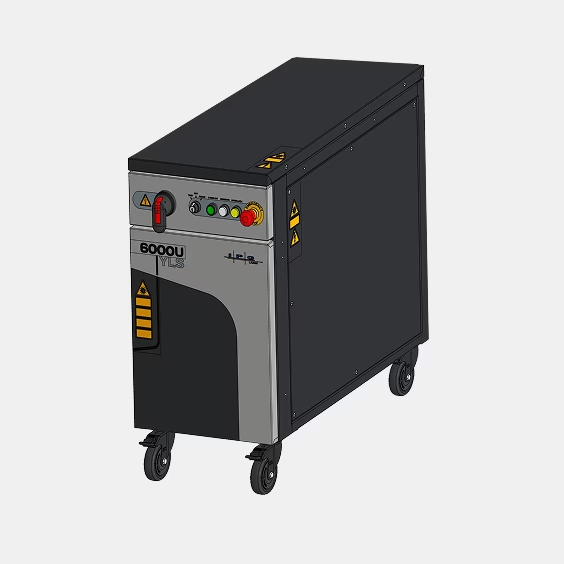
Laser Source
The main element of the system that generates a high-intensity laser beam. The iRS installations typically use continuous VPG laser sources with a power range of 1–4 kW.
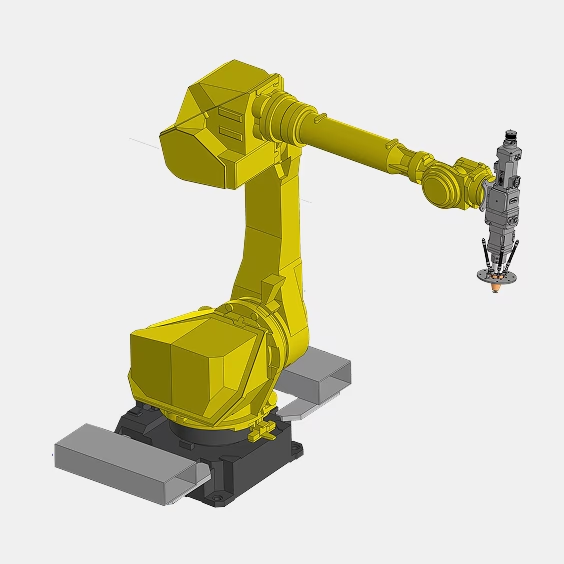
Industrial Robot
Responsible for the precise movement of the laser beam and the delivery of filler material into the cladding zone. Industrial robots provide high accuracy and can perform complex motion trajectories. iRS builds systems based on ABB, FANUC, KUKA, and Staubli robots.
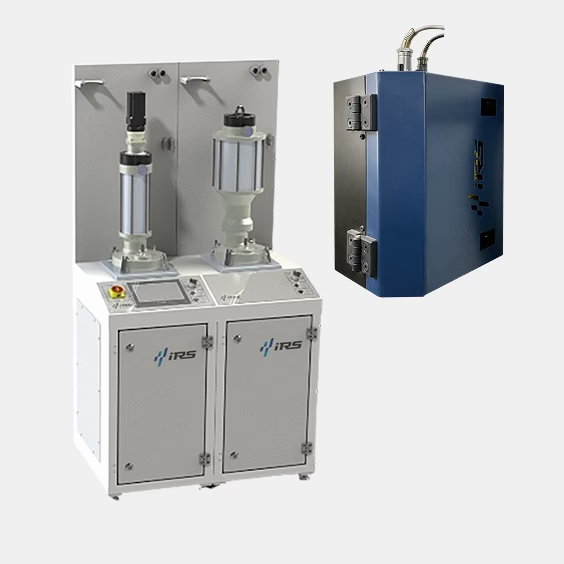
Powder or Wire Feeding System
Depending on the selected cladding type, either powder or wire feeding is used. These systems ensure precise delivery of filler material into the laser processing zone, where it melts and bonds with the base material.

Cooling System
To maintain stable operation of the laser equipment, the system includes an industrial chiller that ensures optimal temperature for the laser source and the optical head.
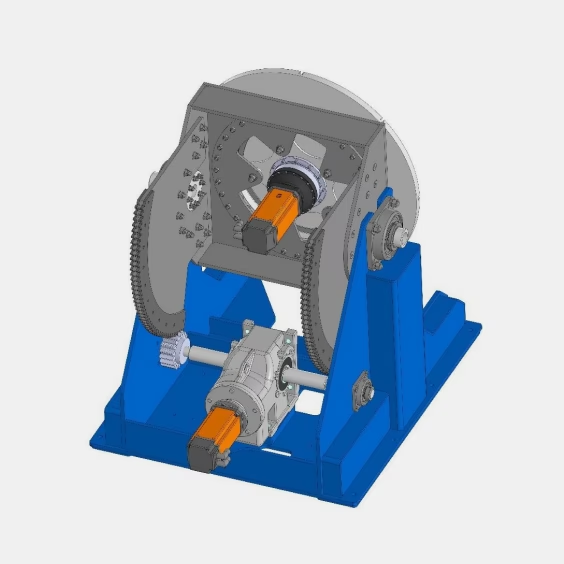
90° Tilting Manipulator
Allows the workpiece to be oriented in space for optimal accessibility and laser head positioning.
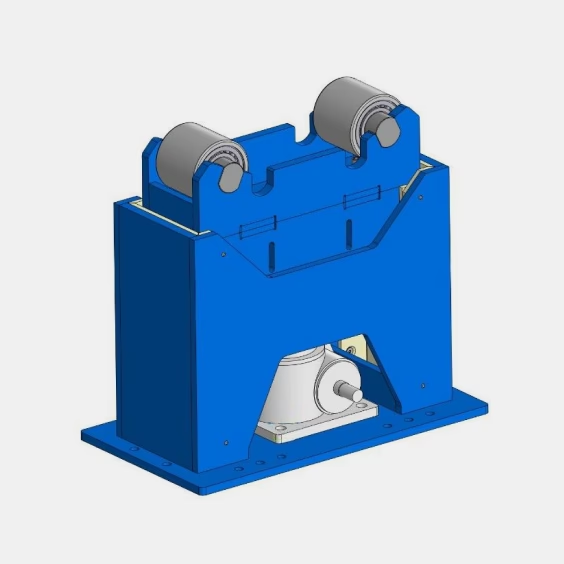
Adjustable Roller Supports
Used both for pre-positioning the workpiece before clamping in the tailstock and for independently supporting rotating parts during processing. The supports are mounted on a rail system, allowing adjustment for different workpiece lengths.
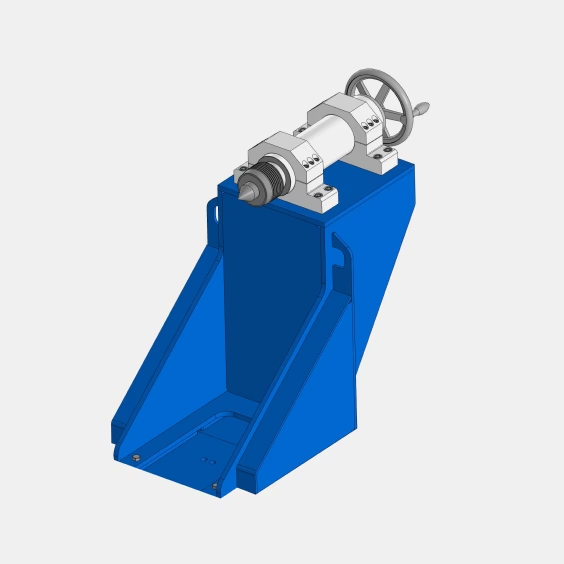
Tailstock
Used to secure the second end of long workpieces.

Control Panel
Designed in an industrial format with a dust- and moisture-resistant keyboard and mouse. Used for selecting control programs and adjusting process parameters.
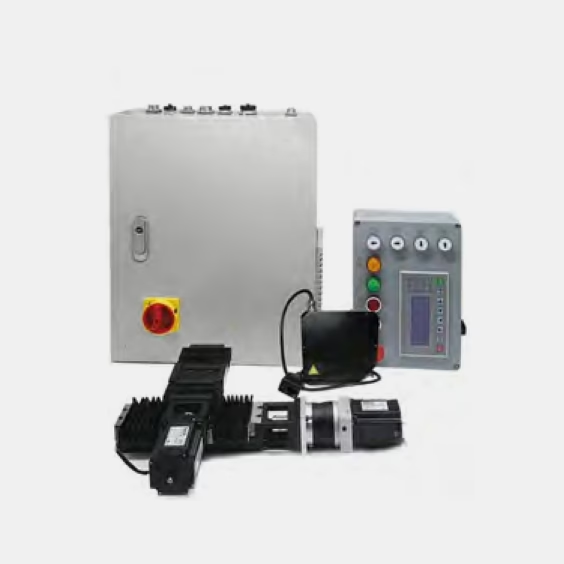
Monitoring and Control System
Includes temperature sensors, visual monitoring cameras, and control systems that track process parameters in real time, ensuring high stability and coating quality.
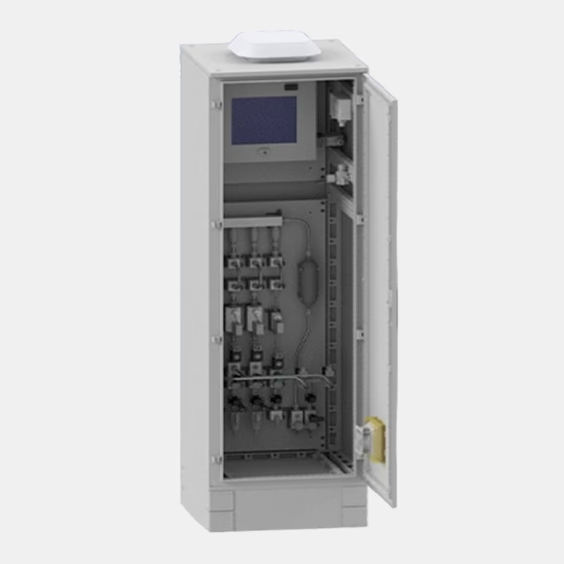
Gas Supply Unit
An inert gas (such as nitrogen or argon) is used to protect the cladding zone from oxidation and contamination. The gas also helps remove molten particles and maintain a clean working environment.
Applications
Robotic laser cladding systems are used in various industries, such as:
- Aerospace: for restoring and strengthening components exposed to high wear.
- Automotive industry: for improving the properties of engine parts such as cylinders and pistons.
- Energy sector: for repairing and protecting pipelines, boilers, and other critical components.
- Mechanical engineering: for restoring and upgrading working parts of machines and tools.

Conclusion
Robotic laser cladding systems represent a highly efficient solution for applying durable and wear-resistant coatings. They significantly enhance the longevity and performance of components while reducing maintenance and repair costs. The versatility and precision of the robotic laser cladding process make the iRS-L-clad systems an indispensable tool in modern industrial manufacturing.
Gallery of completed projects