
Why is it necessary to remove burrs?
Introduction
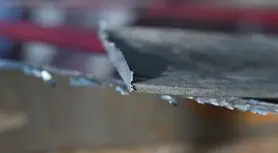
During the processing of metal parts, burrs often appear—small defects that reduce the functionality, safety, and aesthetics of the products. To eliminate these defects, specialized deburring machines are used to ensure high quality and smoothness of finished components. This article discusses the causes of burr formation, methods for their removal, and the advantages of using deburring machines.
Definition and Causes of Burr Formation
Burrs are small projections or irregularities left on metal workpieces after various processing operations. Metalworking processes such as stamping, milling, casting, sintering, forming, plasma cutting, and others can lead to the formation of burrs. These defects can occur at different stages of processing:
- Stamping: pressing the workpiece in a die set.
- Milling: using a rotating tool to remove metal from the workpiece.
- Casting: forming metal into the desired shape.
- Engraving: creating patterns on the metal surface.
- Plasma cutting: cutting metal using a plasma torch.
- Abrasive waterjet cutting: cutting metal with a water jet mixed with abrasive.
- Laser cutting: using a laser to cut metal.
Why Is Burr Removal Necessary?
Burrs jeopardize the functionality, lifespan, and safety of processed parts. They can cause numerous quality issues, such as:
- Cracks and material failure
- Increased localized stress
- Decreased resistance to fracture
- Failure after fewer load cycles
- Poor fastener fit
- Fastener damage
- Increased susceptibility to corrosion
- Increased risk of static discharge
- Unwanted friction and heat
- Increased surface wear
- Overall reduced safety
Burr removal eliminates these defects, creating a safer, more functional, and more aesthetically pleasing component. Mechanical burr removal with a machine also eliminates the need for manual grinding and polishing. This increases productivity, reduces material waste, and improves the final result.
Methods of Burr Removal
Various burr removal methods exist depending on the type of metal and processing requirements:
- Manual deburring: A labor-intensive method where skilled specialists manually scrape or polish burrs off metal parts using simple tools, significantly reducing productivity.
- Mechanical deburring: The use of deburring machines to grind burrs. This method is more costly but far more efficient than manual deburring and is therefore popular in processing operations.
- Thermal deburring: Using combustible gases to generate thermal energy and essentially burn away burrs. This process is ideal for removing hard-to-reach burrs, such as those in cracks or crevices, or removing burrs from multiple surfaces at once.
- Electrochemical deburring: Using a salt or glycol solution to conduct energy through the burrs. Electrochemical energy removes the burrs while leaving the surrounding metal untouched. This process is most useful for extremely complex metals, reaching difficult areas, or ensuring high precision in burr removal.
Deburring and Edge-Rounding Machines
These machines clean and remove scale and burrs from sheet metal parts processed by laser cutting, stamping, or shearing. The specific properties of the metal must be considered during processing. These properties include hardness, ductility, and chemical composition. We will help you find the perfect solution.
Go to section
Advantages of Deburring Machines
Modern deburring machines are equipped with various tools such as brushes, discs, and rotary and belt heads to ensure high-quality burr removal.
One of the advantages of using a deburring machine is the variety of configurations it offers. In many machines, the deburring tools are made of polyamide fibers coated with coarse abrasives similar to sandpaper grains. These abrasives remove burrs, leaving the processed metal smooth.
Different grit sizes and materials are suitable for various metal hardness levels and different applications. Some of the most commonly used abrasives include:
- Aluminum oxide
- Ceramics
- Cubic boron nitride (CBN)
- Diamond powder
- Silicon carbide
Deburring machines can be wet or dry. Some dust from processed materials (such as titanium) is flammable, and a spark from grinding metal can easily ignite it. A wet deburring machine moistens the dust, preventing ignition.
Conclusion
Burr removal is critically important for ensuring the functionality, safety, and quality of metal parts. Deburring machines help optimize metalworking processes, increasing productivity and reducing costs. Choosing the right equipment depends on production specifics and metal processing requirements.
