
Why the size of the tumbling media matters
The size plays a crucial role when choosing the right tumbling media. Ultimately, it will affect the overall quality of the cleaning process.
However, the size of the parts also matters. In general, the media must be able to clean all surfaces of the parts without causing clogging.
To achieve the best results, it is important to ensure thorough mixing of parts with media of the appropriate size.
When cleaning certain parts, it is easy to choose the wrong media size. In this case, the parts may be damaged, or the tumbling process may bring no results. As a rule, larger media are suitable for fast deburring or finishing. Additionally, cleaning with smaller media will require more time.
The results of cleaning or polishing will differ depending on the media size. Larger media can damage fragile parts, while smaller media cannot. Likewise, denser media leave rougher marks, whereas smaller media produce a gentler finish. Sometimes, to achieve the best results, different media sizes can be mixed if a single size is ineffective.
Clogging of tumbling media in grooves and holes is also a common problem. These issues are more likely to occur when using smaller media to clean larger parts.
As a general rule, the media should be larger than any holes or gaps in the part. Ideally, the media size should be at least 70% larger. For example, angled ceramic cylinders easily pass through openings.
If the media and parts are similar in size, it may be difficult to separate them after cleaning. As a rule, the media should be smaller than the parts but not too small to avoid clogging. The easiest way to separate parts from media is by using a sieve or separator. In some cases, magnets may also be used.
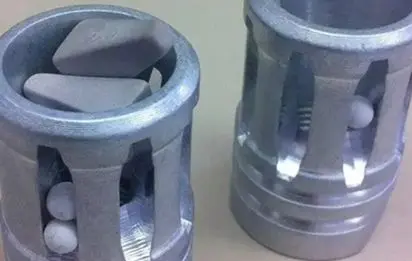
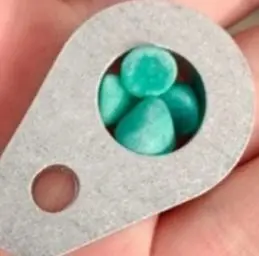
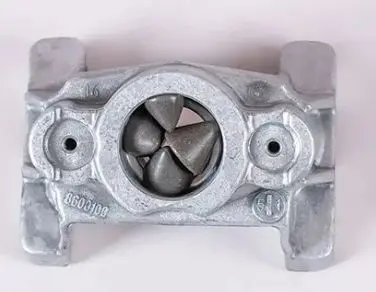
Fig. Example of incorrectly sized media
