
Laser Welding of Brass, Steel, and Cast Iron
Contents:
Working with metals usually depends on their physical properties: plasticity, density, brittleness, and thermal conductivity. But alloys complicate matters due to eutectics and chemical reactions, often dramatically. For example, a non-specialist might note that steel and cast iron are almost the same: iron with some beneficial and not-so-beneficial impurities. A welder, however, would confidently say that these are not even alloys—they are things from different planets! Meanwhile, brass and steel, despite entirely different compositions and melting points, often behave like close siblings.
This is because laser welding has one huge advantage: very rapid heating of a narrow area, triggering physical and chemical processes that are impossible with conventional heating methods. Almost always, these processes are beneficial, but occasionally they may cause concern. In any case, they differ from conditions during conventional welding.
Laser Welding of Brass
There are countless industrial grades of this alloy, but for a laser beam, the exact composition is not critical. They differ in copper and zinc content, and sometimes tin with small additives. Focus first on copper, the highest melting component: copper melts at 1085 ℃, zinc at only 420 ℃. Tin melts even over a campfire.
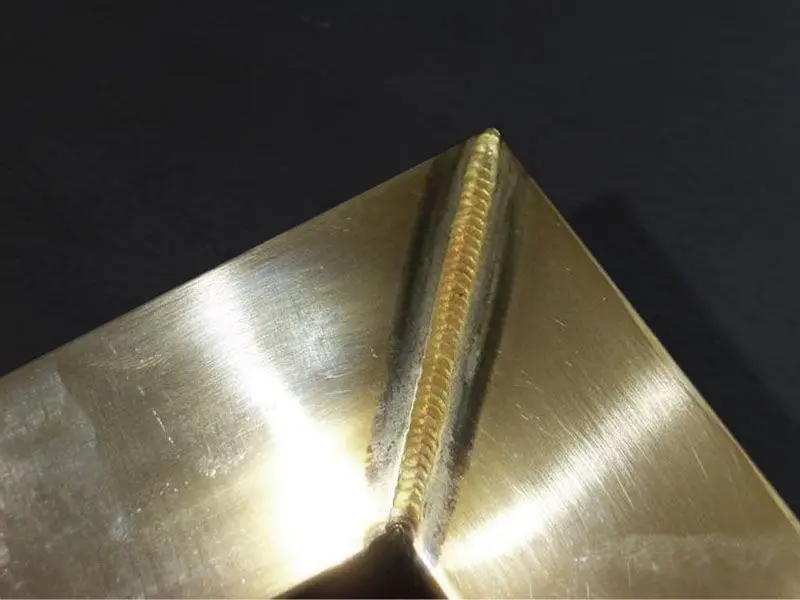
The specifics of all brass alloys mean that the workpieces do not require preheating for any type of welding—preheating can actually cause undesirable deformation. Working with brass is generally easier than with copper. For instance, a fiber laser that can handle a copper workpiece in pulsed turbo mode due to its thickness will handle the copper-zinc eutectic even better without special adjustments.
Perfect Seam
Brass does not have as high a reflection coefficient as copper, melts between 880–950 ℃, and even a thin layer of zinc and tin oxides increases the laser beam's energy absorption. This natural preheating and high heat capacity of molten brass are ideal for a well-tuned pulsed mode in butt welding and work very well in continuous mode.
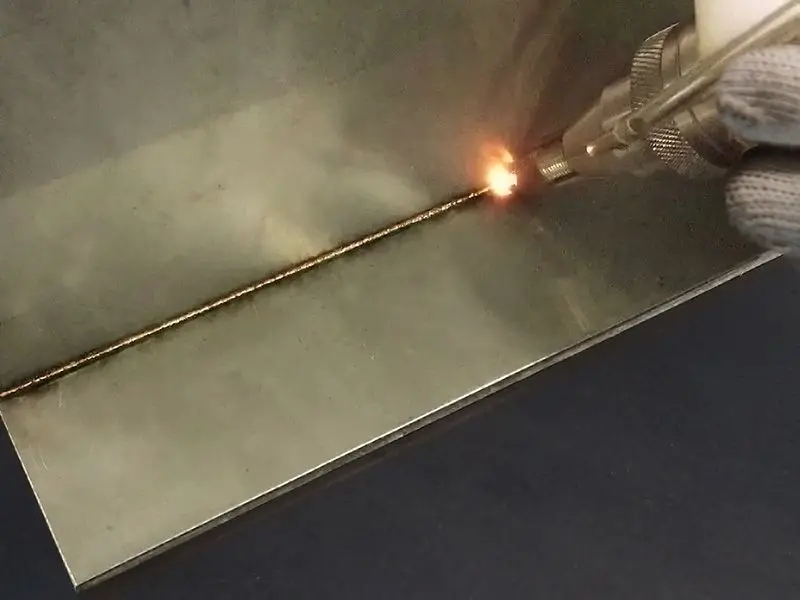
If brass parts are thicker than half a centimeter, it is best to weld vertically and “bottom-up” so the molten material partially flows onto the already cooling weld. As the beam moves, the molten pool's epicenter cools faster, while lower sections solidify more evenly, producing a seam with excellent structure and appearance.
Toxicity
Zinc is always part of brass. It melts easily and evaporates well before reaching its boiling point. Even slight overheating makes it chemically active, and most of its compounds are toxic. Protection with a respirator and goggles is usually sufficient, but good ventilation is recommended.
Brittleness and Delamination
Without the oxide layer, zinc would react with water even under normal conditions. Above 250 ℃, it reacts with steam, and hydrogen may form microbubbles in the alloy or localized overheating. For thin parts under 0.5 mm, especially microcontacts or multilayer PCB traces, consider argon or nitrogen shielding to avoid delamination or breakage.
Laser Welding of Iron and Various Steels
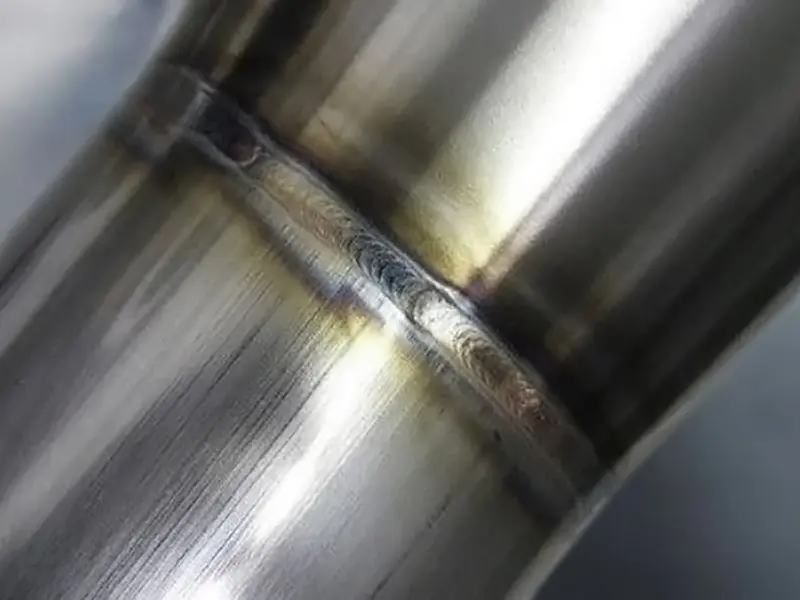
The composition of common steel grades differs little. Typically, evaluation focuses on density, strength, and elasticity. Laser welding conditions for steel remain mostly consistent, but each steel subtype has its own advantages.
Where There is a Beam, There is Strength
Medium- and high-carbon steels are most common, and some alloyed steels behave similarly. Medium-carbon steels (0.45–0.75% C) are often used for welded frame structures. Special alloyed steels may contain 2.5–10% alloying elements.
These steels are prone to hardening structures in the weld and heat-affected zone, causing hot and cold cracks and porosity.
Laser welding with a powerful beam moving at speeds over 30 mm/s can almost eliminate hot cracks, producing a weld with uniform cast structure and altered chemical composition. The effect of hardening may increase weld strength and impact toughness by ~15%.
In any case, the effect of laser welding is beneficial to the weld.
Strength with Elasticity
High-alloy steels can have up to 55% alloying elements, mainly chromium (up to 18%) and nickel (up to 10%). Chromium behaves chemically and physically differently, affecting weld properties.
The main drawback is crack formation in welds due to long, thin, fragile eutectic crystals, which must be refined.
Conventional welding heats a large area, leading to columnar structures. Laser welding limits heat-affected zones and breaks the crystal lattice into fine dendrites, improving weld strength and reducing corrosion-prone structures.
Laser Welding of Cast Iron
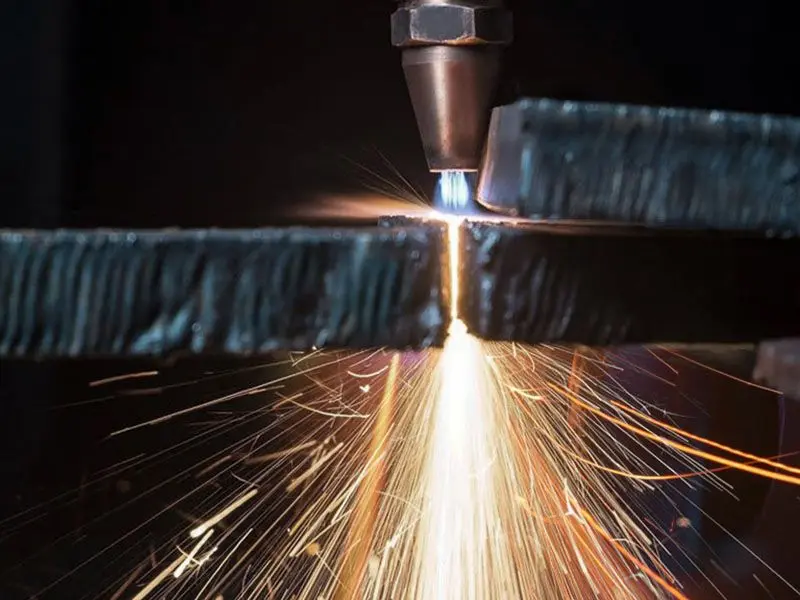
Cast iron contains low overall impurities, but these are non-metallic—carbon, silicon, sulfur, and phosphorus, which are highly reactive. Even ordinary use causes cracks; welding makes uniform cooling unpredictable.
Sulfides
The main culprit is low-melting Fe-FeS, which coats iron grains during cooling. Its high expansion causes stress and cracks in the heat-affected zone.
Silicon
Silicon forms SiO2 and SiO during welding—both hard compounds with melting points above 1700 ℃, which create high-hardness zones prone to cracking.
Carbon and How to Work with It to Your Advantage
Cast iron is divided into white and gray. White cast iron has carbon bound in cementite Fe3C, hard and brittle. Gray cast iron contains graphite, providing plasticity. Gradual cooling is essential. Laser welding reduces problems due to narrow, rapid heating, but not all issues can be fully eliminated.
Cast Iron Tendency to “Whitening”
Rapid heating and cooling always produce cementites and cracks. Experienced welders or preheating to 500–600 ℃ can help. Lasers allow fast, even welding, reducing localized stress.
Sharp Transition Between States of Matter
Different grades have melting points differing by tens of degrees. Laser welding quickly fuses the seam before thermal expansion causes cracks.
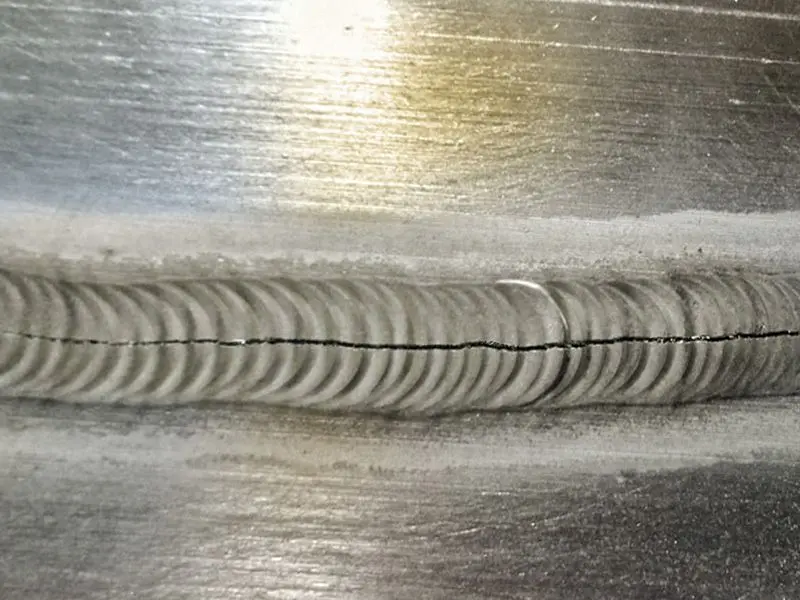
The best approach remains welding with low-carbon steel electrodes or cast iron rods of the same material, using flux (50% borax, 47% sodium carbonate, 3% silica) to ensure quality seams.
