
How to Choose a Laser Welding Machine and Not Regret Your Purchase? Insights from Experts
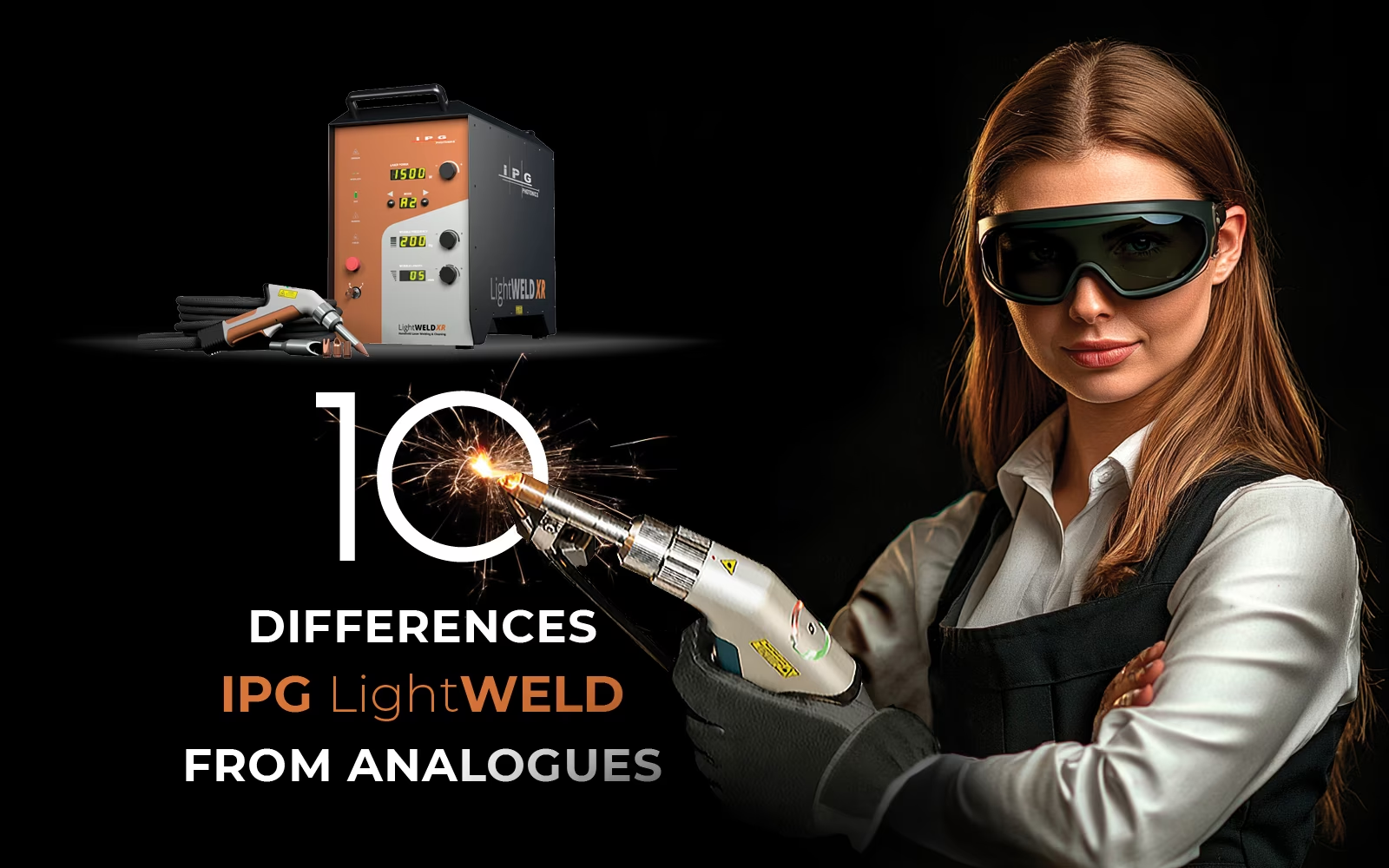
Looking for the perfect handheld laser welding machine?
We’re not just familiar with the topic — we’ve been working in this field for over 5 years!
During this time, we’ve tested dozens of models, analyzed the pros and cons of different technologies, and compiled an entire library of useful materials to help you make the right choice.
Want to find out how time-tested technologies actually differ from “analogues”? Or maybe you’re curious what’s really behind the low price of some machines? We’re ready to share everything we know and help you find a machine that becomes a true working tool — not a headache.
Let’s get started!
1. Proven functionality: a welding machine must deliver high-quality welding!
Laser metal welding
When choosing a machine, it’s important to pay attention to its functionality. Some manufacturers offer “3-in-1” or “4-in-1” devices claiming welding, cutting, and cleaning capabilities. But such universal models often fail to deliver high-quality results in any of these functions.
Proven LightWeld machines from IPG
- Specifically designed and primarily intended for laser welding.
- They include the option for localized laser cleaning (cleaning zone width 0–15 mm). Switching from “welding” to “cleaning” takes 30 seconds.
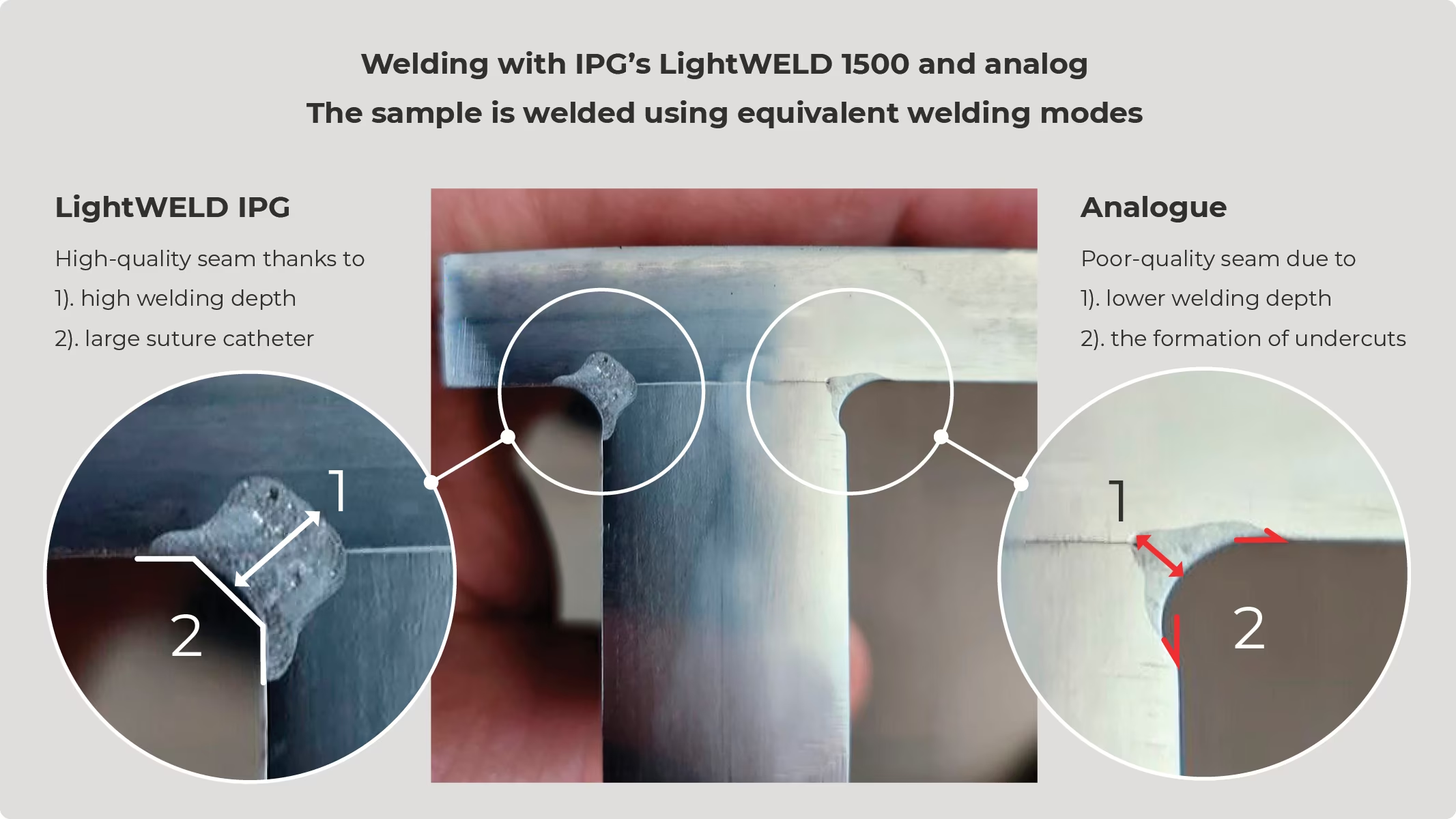
- Welding quality is consistently high and significantly superior to analogues — the seam is uniform, with no pores or undercuts.
- Support for NAKS certification, Marine Register certification, X-ray and ultrasonic inspection of welds.
- Extensive library of preset modes
for welding and cleaning. Manual settings are also available. - Cutting function included — cutting capabilities are roughly equivalent to weld penetration depth.
- Extended set of high-quality spare parts and certified personal protective equipment.
- Possibility to test samples on professional equipment with laboratory analysis and an official test report.
Analogues
- The claimed multifunctionality (3-in-1 or 4-in-1) does not provide stable results in any of the listed functions.
- Switching operating modes — reconfiguring between welding, cutting, and cleaning — is implemented through partial disassembly of the gun or replacing it entirely. This breaks the system’s sealing and exposes critical optical components, which severely reduces equipment lifespan and reliability.
- Multifunctionality makes it difficult to use the machine for its main purpose — welding parts — and results in low weld quality.
- This leads to the inability to properly use the machine for its main function — welding parts with consistent quality.
- Poor weld quality is visible to the naked eye. Porosity, undercuts, insufficient penetration depth that does not match the claimed power — all of this prevents passing any laboratory tests and makes it impossible to achieve a high-quality welded joint.
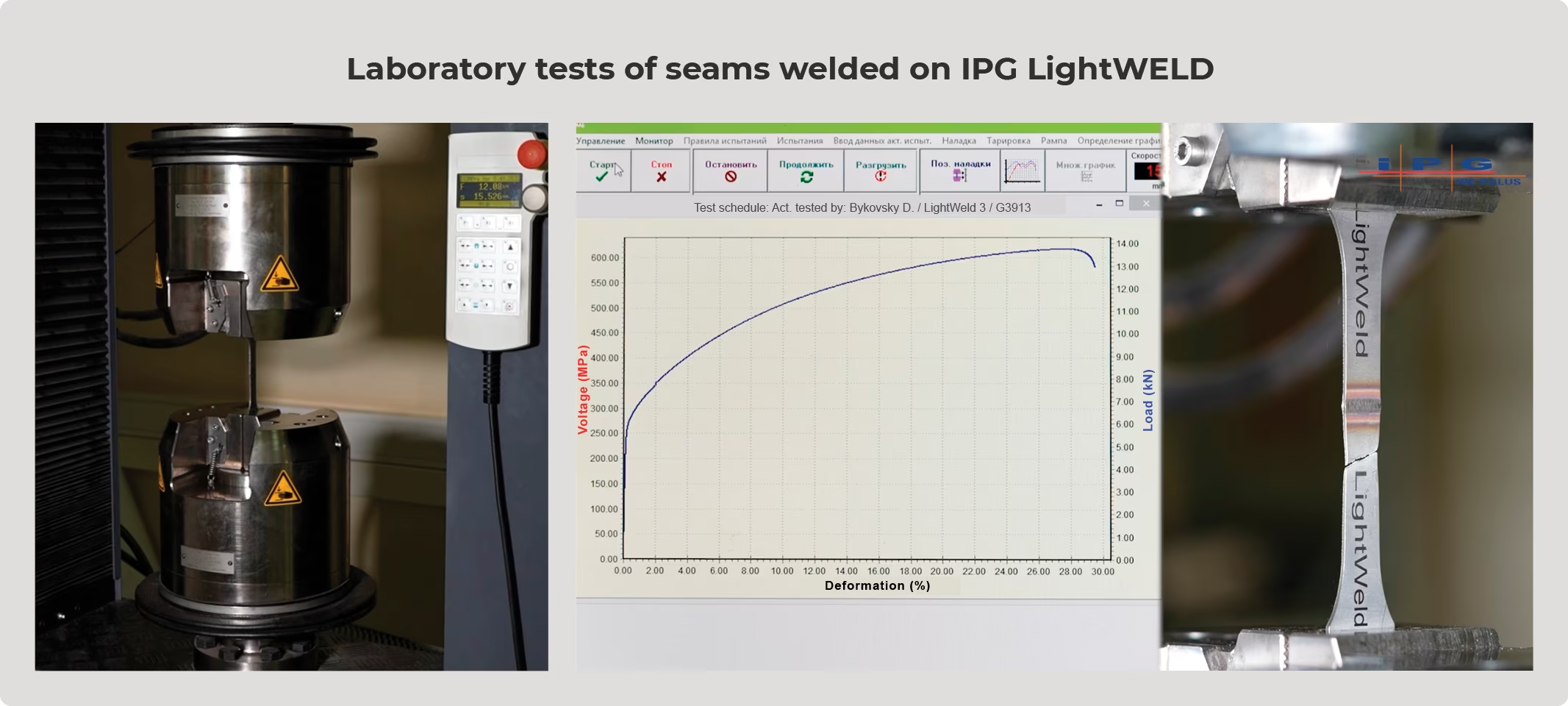
Laboratory testing of metal samples welded with IPG
2. Production and support: why is a Russian manufacturer important?
Choosing equipment with local manufacturing offers many advantages: from the availability of spare parts to fast and responsive technical support.
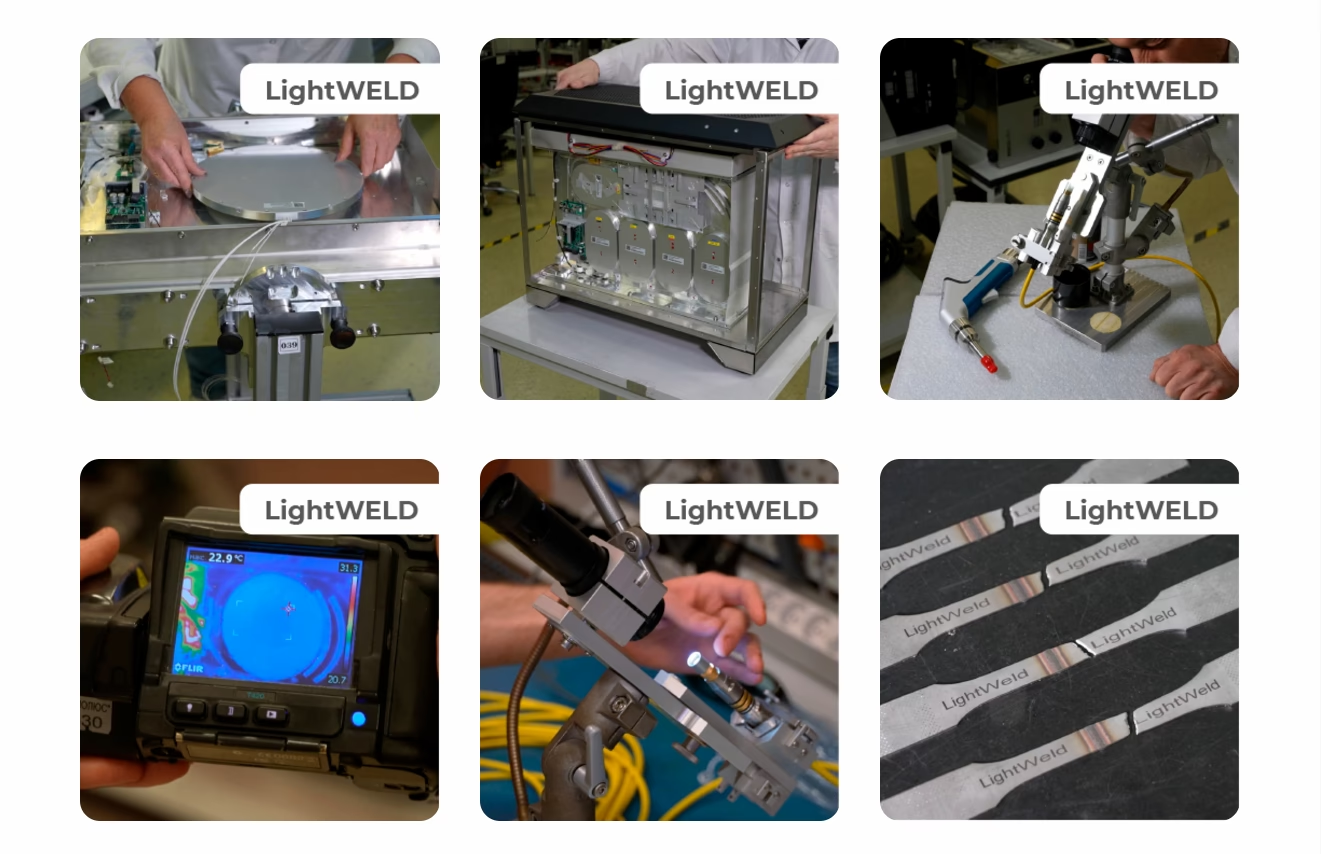
High-quality components and assembly of IPG machines
Proven LightWeld systems from IPG
- Designed and manufactured in Russia (Fryazino). The production uses top-tier optical components and only proven engineering solutions.
- Equipment, spare parts, and service are all based in Russia, with the option to obtain loaner equipment.
- You can see the equipment in operation BEFORE PURCHASE or take it for trial testing.
- 24/7 technical support from the supplier and manufacturer.
- Comprehensive user manual, tips, and training videos. Preventive maintenance guidelines with detailed descriptions and daily operator checklists. Clear “exploded view” of the welding gun.
- Service technician dispatch time: 1–3 days.
- High-quality consumables with longer lifespan compared to Chinese counterparts. 100% of consumables are ALWAYS IN STOCK.
- Annual upgrades of previous models and release of new ones.
- Continuous work on reducing warranty claims, improving supply kits, and enhancing post-sales customer support.
Alternatives
- Equipment is most often shipped from China.
- No possibility to receive loaner equipment.
- Purchasing and shipping in batches may result in long waiting times for delivery.
- Trial testing is often not available.
- Short, poorly informative instruction manual in English, typically limited to two pages.
- After purchase, the customer is left alone with all issues and questions.
- Consumables and spare parts are difficult to find, and delivery time may reach up to 2 months. Their lifespan is significantly shorter.
- The supplier often does not understand the equipment they sell and cannot assist in tuning the laser welding process at your facility.
- Use of cheap materials from local Chinese manufacturers affects service life and increases the frequency of repairs.
- May contain IPG components that are not serviced when imported into Russia.
- Quality declines as suppliers chase lower prices.
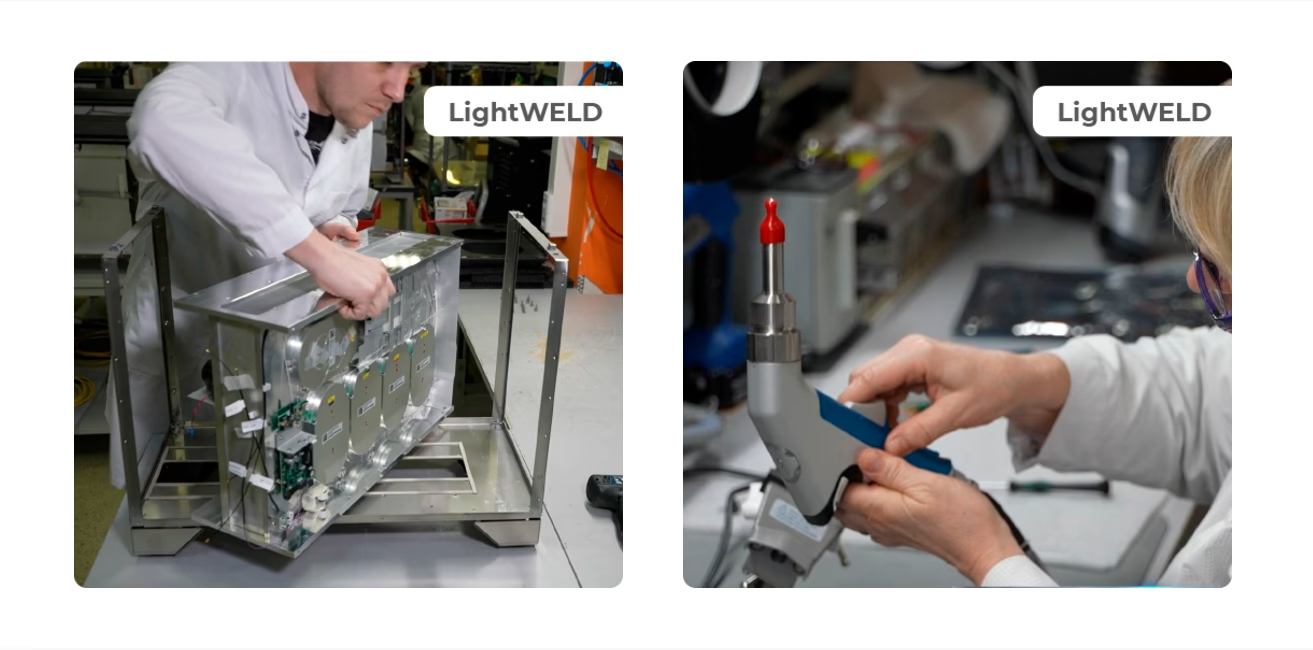
LightWeld by IPG is manufactured in Russia
3. Processed Materials: Capabilities You Can't Ignore
Not all machines can handle aluminum, copper, or galvanized steel. For demanding tasks, it is important that the device has the appropriate settings and power.
Proven LightWeld units from IPG
- Accurately stated penetration depth on steels
(with and without filler wire). - High-quality welding of aluminum, non-ferrous metals and their alloys; clean, precise welding of galvanized steel; preset modes for welding titanium and nickel alloys.
Analogs
- Poor — and often completely incapable — welding of aluminum.
- Attempts to weld highly reflective and hard-to-weld materials can lead to complete equipment failure.
- No capability to weld non-ferrous metals (copper, brass, and their alloys).
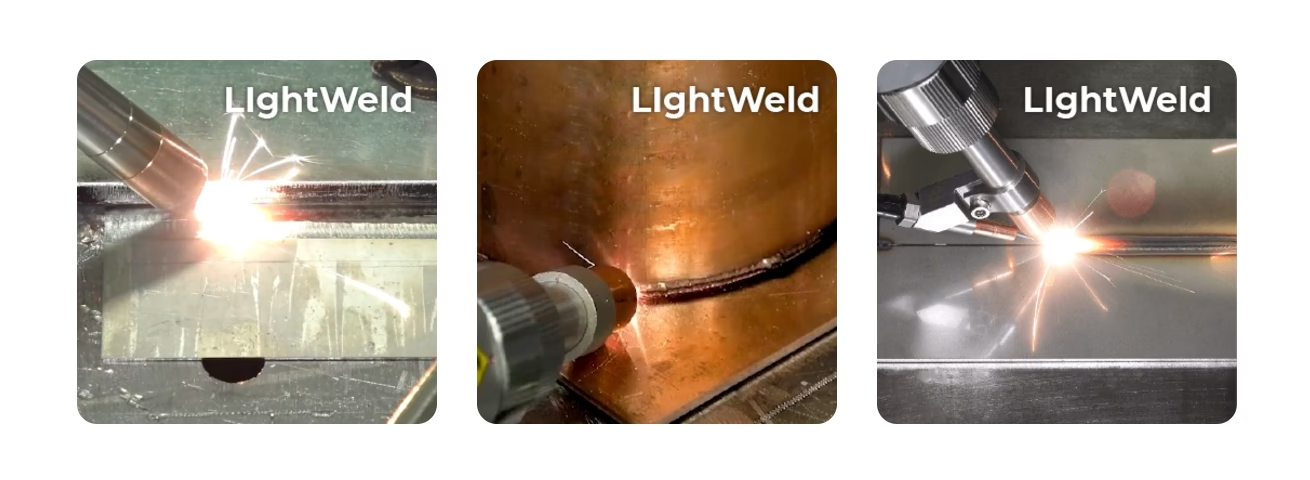
LightWeld by IPG welds non-ferrous metals, highly reflective and hard-to-weld alloys
4. Laser Source:
The laser source is the key component of any laser welding machine, directly determining stability, weld quality, and equipment longevity. Learn what to look for when choosing a system to avoid mistakes and ensure reliable long-term performance.
Proven LightWeld units from IPG
- Integrated 1500 W air-cooled fiber laser with High Peak Power (peak power ― 2500 W), developed specifically for LightWELD handheld laser welding.
- LightWELD XR uses a 1500 W laser with a heating spot reduced by 2.5× — comparable in capability to 3.5 kW analogs.
- Settings allow welding metals from 0.3 to 7 mm thick with stable, high-quality results.
Analogs
- A separate built-in continuous-wave fiber laser with a power range of 1 to 3 kW. These sources are typically the same as those used in laser cutting machines, and due to the lack of fine tuning and dedicated optimization, they cannot deliver high-quality welds.
- Laser source parameters exist only “on paper,” leaving the user to simply “take their word for it.”
- Poorly thought-out development strategy focused mainly on price and superficial similarity to high-quality laser sources.
5. Back-Reflection Protection:
Back-reflection is one of the major risks affecting the reliability of handheld laser welding machines. Without proper protection, it can cause costly failures and long equipment downtime.
Proven LightWeld units from IPG
- 100% protection against back-reflection. This is a critical advantage that prevents service incidents and significantly reduces operating costs.
Analogues
- The reliability of protection against back-reflection is questionable. Due to back-reflection, the source fiber, the most expensive component in manual welding, can burn out in an "instant".
6. Quality of Pump Diodes:
Pump diodes are an important component of a laser source, determining its reliability and efficiency. High-quality diodes ensure stable operation and a long service life of the equipment, while cheap alternatives often cause failures and reduced performance.
Proven LightWeld devices from IPG
- The advantage of the pump diode production technology at NTO IRE-Polus is a longer service life and stability of output parameters. Some sources on laser cutting machines have operated for almost 100,000 hours with a power drop of less than 5%. In case of force majeure, it is always possible to replace an individual pump diode at the production site in Fryazino.
Analogues
- Poor quality pump diodes in a laser source directly affect the lifespan of the laser source. Cheap pump diodes degrade faster, leading to a reduction in maximum output power, i.e., the need to increase the input power to melt wire and metal edges, and a decrease in weld penetration. The power drop in some Chinese laser sources can reach up to 20% per year.
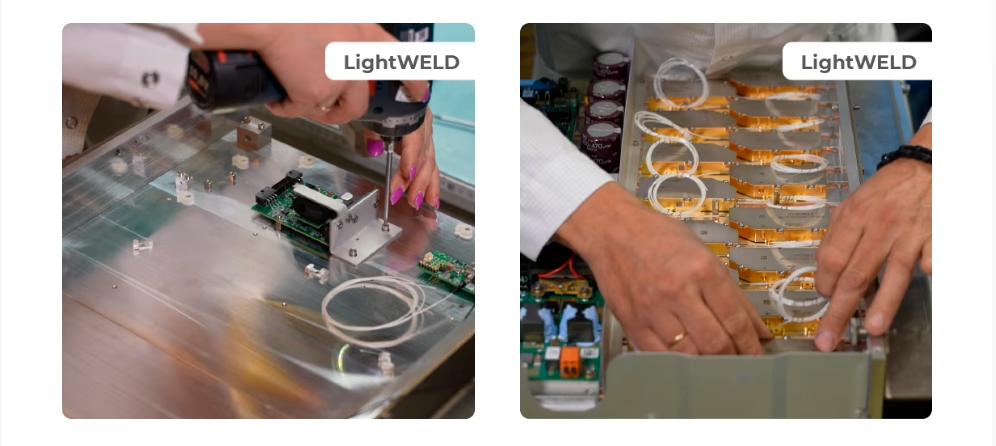
Welding machine components
7. Laser Unit Weight:
When it comes to welding work, convenience and equipment mobility play a key role. This is especially important for those working on-site or in confined spaces.
Proven LightWeld devices from IPG
- 53 kg.
- Mobile welding system. The device is easy to move or transport. Can be optionally equipped with a trolley.
Analogues
- Up to 200 kg.
- Low-mobility welding system. In most cases, loading, unloading, and transportation are only possible with special equipment.
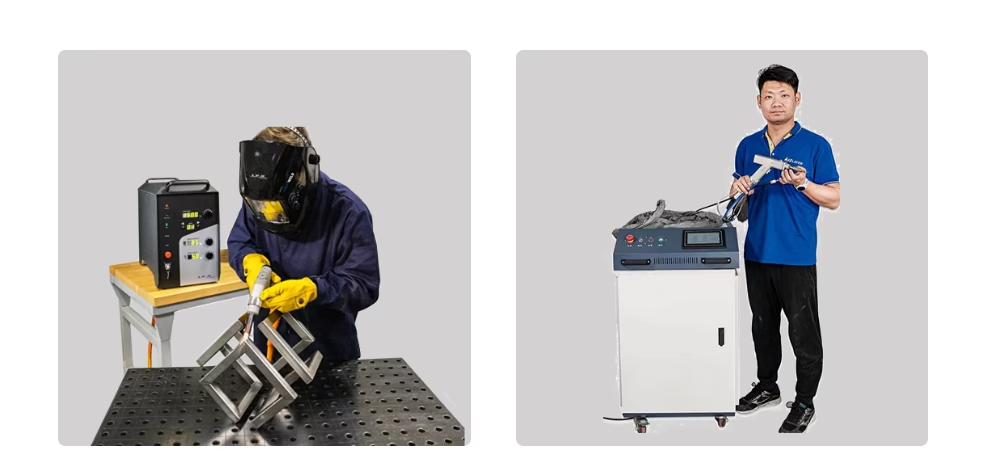
Welders with welding machines
8. Laser Unit Cooling:
The cooling system of welding equipment is not just a technical detail, but a key factor in its stable operation and longevity. Air-cooled devices, such as LightWeld from IPG, stand out for their ease of use and reliability. They require no maintenance, are dust-protected, and resistant to overheating, making them convenient for daily use.
In contrast, alternatives with water or combined cooling can create additional challenges: the need to drain water, risk of leaks, and even damage at sub-zero temperatures. This article examines the advantages of air cooling and compares it with other systems.
Proven LightWeld devices from IPG
- Air cooling.
- Never overheats!
- All system components are dust-protected. Dust accumulates only in the radiator "tunnel".
- The system requires no special maintenance, reliably protects the device from overheating, increasing welding time and performance.
Analogues
- Requires maintenance and may "leak".
- During transportation ― water must be drained, and it may freeze at sub-zero temperatures.
- Chillers are often made of very cheap components, leading to frequent breakdowns and temporary inability to operate the system.
9. Overall Safety System:
When it comes to welding work, convenience and equipment mobility play a key role. This is especially important for those working on-site or in confined spaces.
Proven LightWeld devices from IPG
- Optical sensor for plasma torch presence.
- 2-stage trigger – activation and emission start.
- Contact sensor for the gun nozzle with the workpiece.
- Ability to connect external interlocks.
- Laser-on indicator on both the gun and the unit.
- Built-in emergency stop button on the laser unit.
- Sensor for correct alignment of the gun and laser unit.
- Gas supply monitoring system.
Analogues
- No plasma sensor.
- Existing sensors and safety systems are easy to bypass and require responsible operator behavior.
Conclusion: Your Choice Determines Success
A laser welding machine is not just a tool, but an investment in your business. To avoid unnecessary costs and ensure reliable operation, choose proven models with support, functionality, and transparent specifications.
If you want recommendations from professionals, test the equipment, and be confident in your choice, turn to experienced experts who can guide you through all the details.
Ready to make the right choice?
Schedule a demonstration, visit our production facility, and we will show you the real operation of the laser welding machines.
Our team of specialists will assist you at every stage!
