
Vibration Treatment in the Aerospace Industry
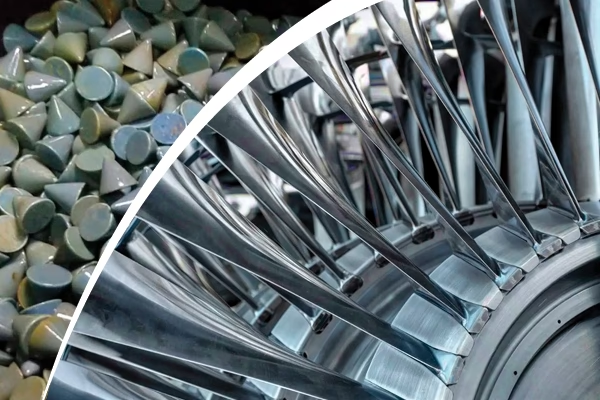
End products of the aerospace industry operate around people daily, so strict requirements are imposed on the condition of edges and surfaces when it comes to processes related to the aviation sector.
The aerospace industry imposes very high standards for surface cleanliness on parts such as fan and turbine blades. If fan blades have smooth surfaces, the risk of deposits sticking to the aerodynamic profile is reduced. The smoother the surfaces of aerodynamic blades, the lower the engine operating temperature. This allows for a greater margin between the actual exhaust gas temperature and the engine’s maximum exhaust gas temperature (MEGT). Such temperature reduction improves the time between overhauls of aircraft engines, allowing them to remain in service longer before a major overhaul is required. Improved turbine blade surface treatment also enhances the acceleration and compression of airflow through turbines, reducing fuel consumption—an invaluable technical advantage given the rising cost of fuel. Reducing surface roughness also increases fatigue strength, which is important since aircraft components are subjected to various stresses during operation.
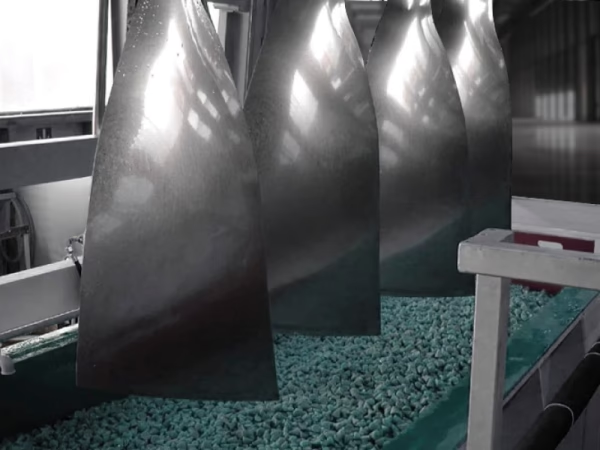
Stress concentration in parts such as fan or turbine blades in an aircraft engine increases due to sharp angles and burrs. Deburring and edge treatment reduce stress concentration, further enhancing fracture resistance and fatigue strength. It has been observed that most fatigue cracks originate on the surface of a part rather than inside it. Therefore, surface treatment is critically important for the long and safe service life of a part, especially in the aerospace industry. During assembly, rough surfaces and sharp external edges can also damage painted surfaces. Sharp exterior corners can act as accumulators of electrical charge and pose a risk of static discharge. During flight, sharp edges can develop charge imbalances and become sparking points when voltage is applied. This potential difference can be caused by static charge and/or lightning strikes.
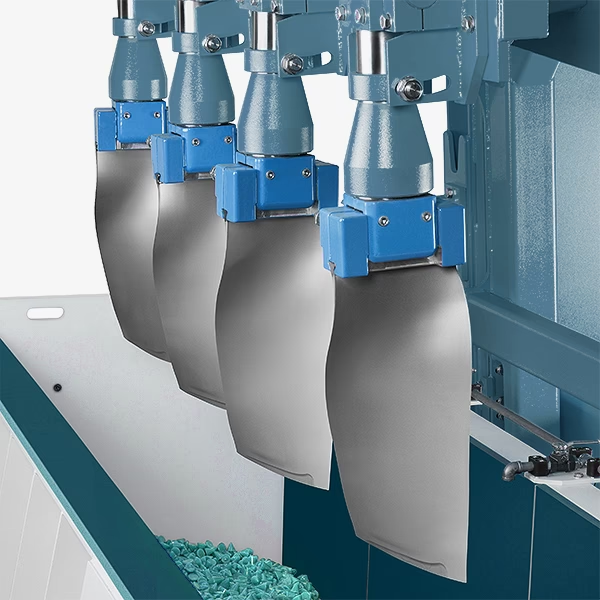
Vibration finishing is one such widely used process that can achieve the surface cleanliness requirements set by the aerospace industry and prepare parts to withstand potential hazards as described above. The process is flexible and cost-effective, allowing many parts with complex geometries (typical for aerospace components) to be treated simultaneously with minimal effort. Vibration finishing promotes favorable compressive stresses and ensures stress equilibrium throughout the part since all elements are treated equally. These compressive stresses counteract tensile stresses caused by cracks and help inhibit their propagation. Many machining and grinding processes induce residual stresses on part surfaces.
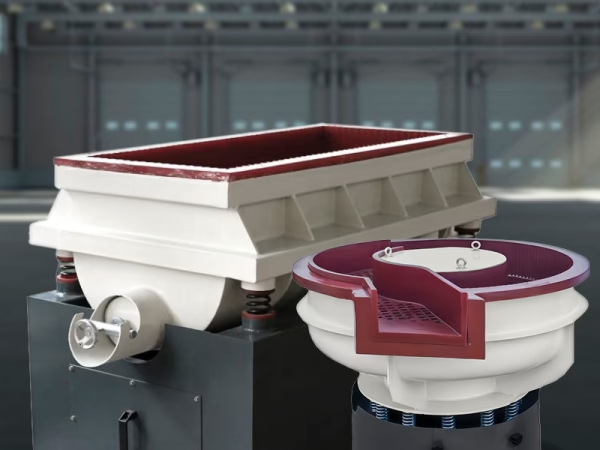
A typical fan blade in the aerospace industry measures 1200 mm in length and 500 mm in width. Tray-type vibratory tumbling is used to process such blades. Smaller and rotating aerospace components, such as turbine blades, compressor blades, and disks, are processed in rotary vibratory tumblers. During processing, fixtures are used to prevent damage from burrs or other defects on thin edges. Fuselage structural elements and wing spars undergo deburring and radius finishing in large tray tumblers. Parts with burrs and smooth radii, unlike sharp edges, have higher resistance to fatigue crack initiation and propagation. Additionally, paint adhesion to the edges of components is improved, which is beneficial for subsequent manufacturing processes.
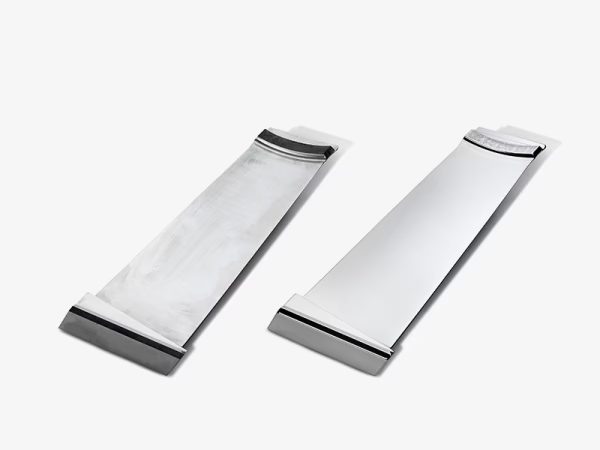
Smoothing and finishing of turbine blades
