
Wet and dry deburring
Innovations in machining technology have become more advanced and efficient over the years. However, despite these innovations, components and parts often still have residual imperfections. Deburring involves removing rough edges around processed parts or components. This metal finishing process is crucial for achieving the desired final product. It is also necessary for other processes such as electroplating or powder coating. One of the most common imperfections is the presence of burrs left after plasma, laser, gas, and other cutting and processing methods.
There are two types of deburring systems — wet deburring systems and dry deburring systems. Understanding the differences between wet and dry methods can help you choose the best option for your operation.
What Is Wet Deburring?
Wet deburring systems generally differ from standard dry systems in the design of the conveyor belt and the method of workpiece fixation. Here, the conveyor belt has a recessed section with a tank for used coolant, and the workpieces are fixed using pressure rollers installed at the beginning and end of each deburring station, whether it is a belt or a rotary head. While parts move continuously along the conveyor, a coolant is sprayed onto them through special nozzles before each deburring stage.
The liquid spraying during the deburring process protects the workpieces from heating before passing through abrasive heads due to its lubricating properties. Wet finishing or deburring usually works best with metals that generate a large amount of dust. A filtration system located beneath the machine collects chips and fine particles through filters and recirculates the coolant back onto the parts through spray manifolds.
Advantages and Disadvantages of Wet Deburring
- Wet deburring offers many advantages for material processing. These machines eliminate the need for an external dust collector, as the liquid used in the process filters out dust.
- Allows processing of various types of metals without ignition risk, such as titanium alloys.
- Reduces the risk of workpiece deformation due to the cooling effect.
- Improves corrosion resistance when using a suitable type of coolant.
- Requires less floor space due to the absence of a dust collection system.
- Extends the lifespan of abrasive belts.
- Provides a finer and higher-quality surface finish.
There are also some drawbacks of wet deburring that should be considered.
- Neglecting regular and consistent maintenance can lead to severe corrosion and damage to critical components.
- Higher cost due to chemicals and coolant mixtures.
- Increased complexity of commissioning.
What Is Dry Deburring?
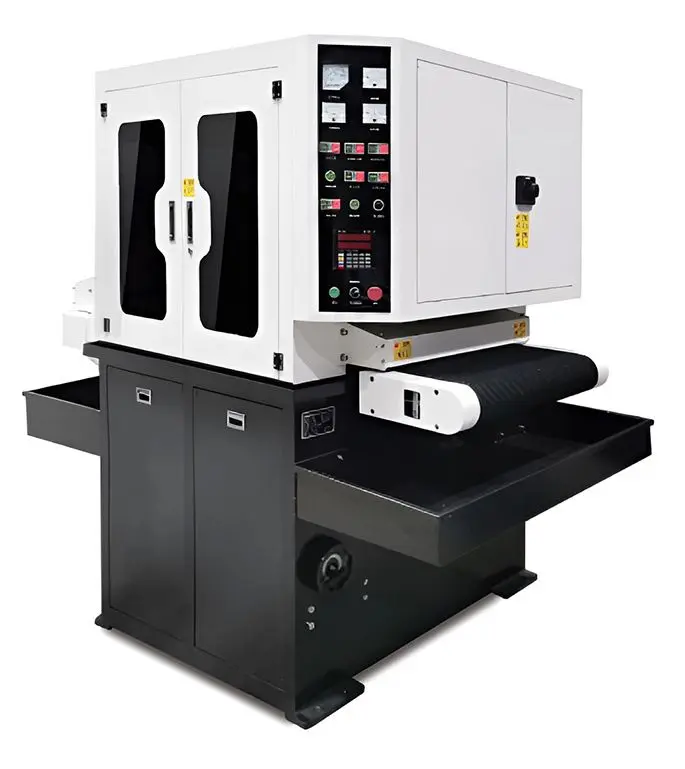
Dry deburring uses an abrasive belt or brush to remove burrs and other imperfections from newly cut parts. No coolants or sprays are used in this process. Dry deburring generates more dust, since the removal of imperfections, including vertical burrs, scale, scratches, and pitting corrosion, occurs through unlubricated abrasion.
Dry deburring uses materials such as endless belts and rotary brushes to achieve the final surface finish. Dry deburring increases friction at the points of contact between abrasive and metal, generating heat that increases the risk of ignition — especially if working with aluminum or titanium.
Advantages and Disadvantages of Dry Deburring
Like wet deburring, dry deburring has its unique advantages and disadvantages that must be compared before choosing between the two methods. Some of the most notable advantages include:
- Requires less maintenance compared to wet deburring and provides a more durable system.
- Lower operating and purchasing costs, making it a better choice for certain operations.
- Ideal for production lines working with a single metal type without risk of explosion or fire.
You may choose dry deburring systems to reduce costs and maintenance requirements. However, there are additional factors to consider before making a final decision.
- Increased risk of residual dust particles remaining on finished materials, requiring additional cleaning steps.
- A wet dust collector is required for safe operation.
- Increased risk of ignition due to heated environments when processing certain metal combinations.
- Although dry deburring may be suitable for your operations, it is important to consider which types of materials you are working with to avoid safety hazards.
- Higher abrasive consumption due to lubrication-free finishing.
What to Consider When Choosing Between Wet and Dry Deburring
Both wet and dry deburring methods have unique advantages and disadvantages, and every working environment is different. When choosing between the two methods, consider the following:
Materials: If you are processing multiple metal types, especially aluminum or titanium, you should choose a wet deburring machine to reduce fire risks and potential injury.
Warping: Dry deburring machines may deform finished parts due to heat generated from abrasive contact. Wet deburring machines ensure parts do not become contaminated with dust and are not affected by heat deformation.
Maintenance and Downtime: To minimize downtime from maintenance, you may choose a dry deburring system. Wet systems require more frequent maintenance and daily cleaning to ensure safety and continuous operation, which can increase downtime.

Whether you are looking for wet or dry deburring systems, we can help. We offer a wide selection of automated deburring equipment to meet the needs of any company. You can be confident that our durable and versatile machines offer impressive service life, helping you save and reduce maintenance costs.
