
Preparation of the foundation for cast iron plates

Before starting the installation of cast iron plates with T-slots, special attention must be paid to the preparation of the foundation for their installation, as this has a significant impact on the equipment's service life.
The main requirements for the concrete base are as follows:- The foundation must have high rigidity and vibration resistance. This requirement is largely determined by the operating conditions, as a cast iron plate with a T-slot can be used not only as a working surface for welding operations but also as a base for securing metalworking tools.
- The foundation surface must be free of cracks, potholes, protrusions, and other defects.
- Depending on the geometric dimensions of the formed working area, high accuracy (up to ±7 mm along each axis) in positioning the anchor wells must be ensured.
- It is necessary to consider the need to level any errors accumulated during the assembly of the plate area when designing the wells. Otherwise, significant axial misalignment of the embedded anchors relative to the installation wells may occur.
- Compliance with these requirements depends not only on the availability of special equipment but also on the competence of the working personnel.
The foundation preparation process is generally similar to similar works during the installation of other large-scale equipment. It can be conventionally divided into several stages:
- Site preparation and marking;
- Formwork erection;
- Concrete pouring;
- Vibration treatment;
- Surface leveling.
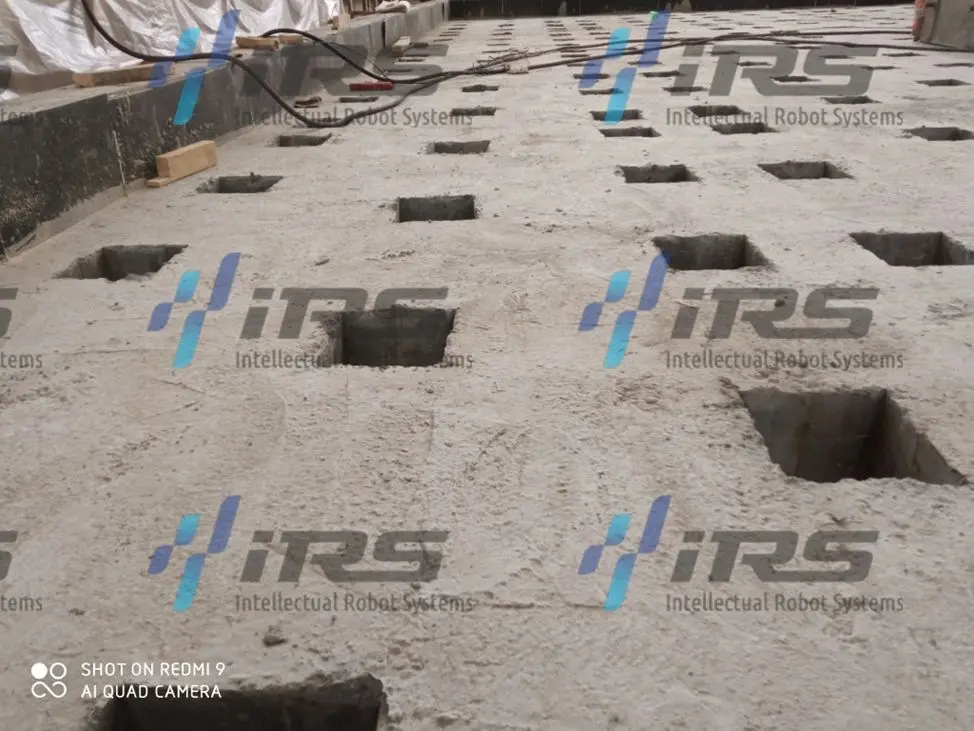
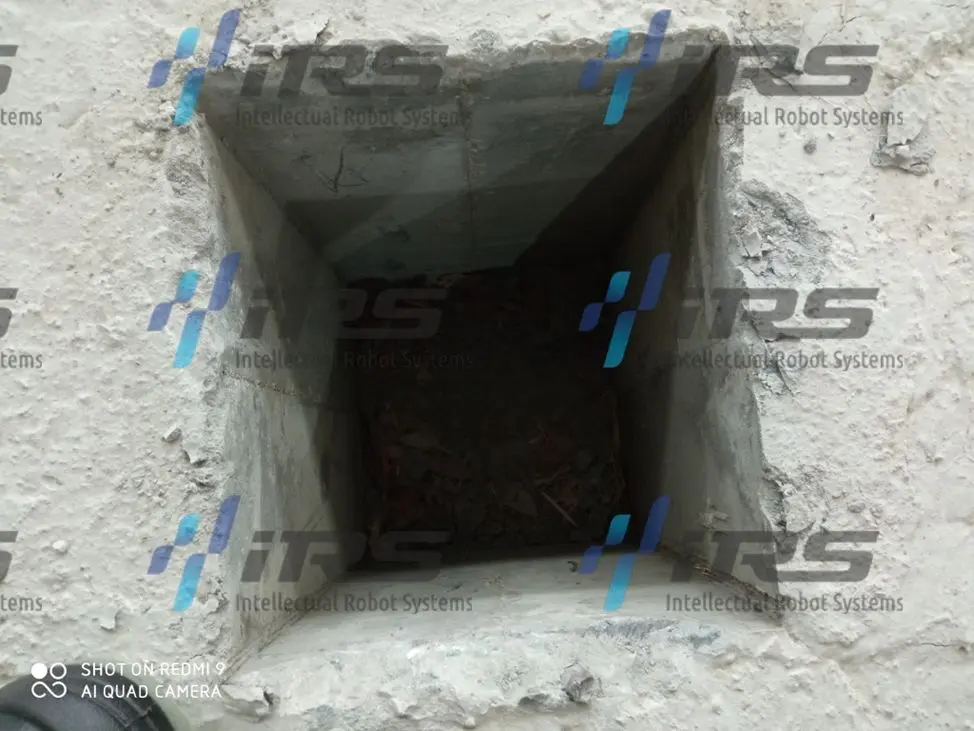
Foundation preparation begins with marking the site where the future plate area will be installed. In our case, the plates were mounted flush with the floor level in the existing production workshop, so it was necessary to form a pit, the depth of which was calculated so that after installation, the cast iron plate would be level with the floor.
After completing the pit formation, we proceeded to install the formwork into which the concrete mixture will be poured.
